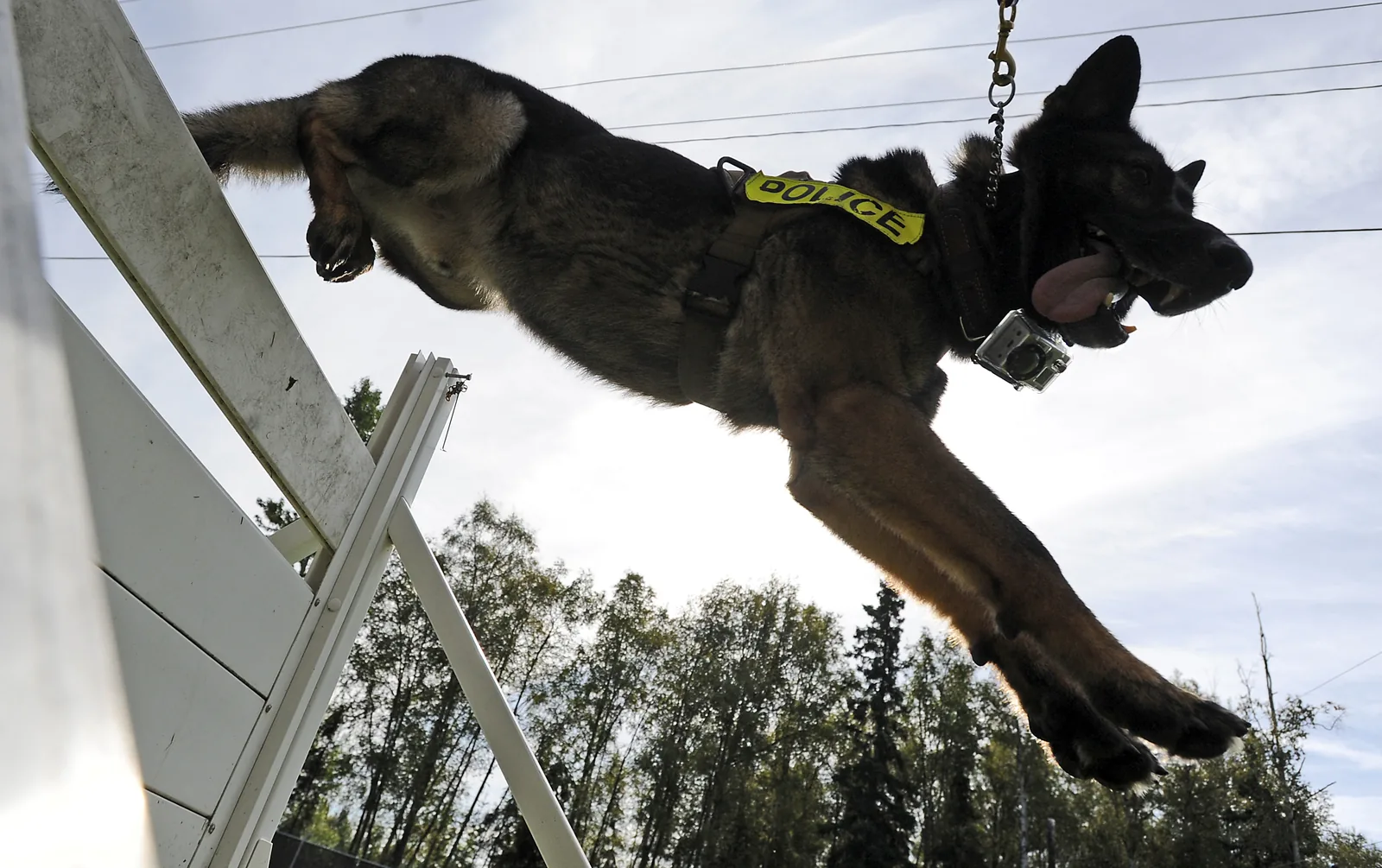
8 GPS Dog Trackers and Location Systems Worth Comparing in 2026
A city dog's escape tracker and a hunting dog's backcountry tracking system are not the same product category. Some devices depend on LTE cellular service and a phone app. Others use dedicated radio links and a handheld. Some combine both.
This guide compares products by where they work and what problem they solve, not by giving every device one artificial score.
Methodology: Top Dog Site did not conduct a controlled field test of all eight devices. Specifications and category recommendations are based on current manufacturer documentation checked on 2026-08-13. Battery claims are manufacturer maximums and vary with signal, update frequency, temperature, power-saving settings and device age.
Quick comparison
| Product | Connectivity style | Manufacturer battery claim | Best fit |
|---|---|---|---|
| Tractive DOG 6 | GPS + cellular/app | Up to 14 days | Most everyday pet owners |
| Tractive DOG 6 XL | GPS + cellular/app | Up to 6 weeks | Larger dogs / maximum cellular-tracker battery |
| Fi Series 3+ | GPS + cellular/Wi-Fi/base ecosystem | Up to 3 months | Integrated smart collar + long battery |
| Fi Ultra | LTE + Wi-Fi + Bluetooth + satellite fallback | 2–3 days | Higher-frequency/off-grid-oriented tracking feature set |
| Garmin Alpha LTE | LTE + multi-GNSS; integrates with Alpha ecosystem | Up to 32 hours | Sporting dogs with cellular option |
| Garmin Alpha T 20 | GPS tracking collar + compatible Garmin handheld/radio ecosystem | Dynamic; activity dependent | Hunting/field work beyond phone-only systems |
| Dogtra PATHFINDER2 | GPS + dedicated phone/connector system | Verify current model spec | Hunting/training users |
| PetSafe Guardian GPS 2.0 | GPS + cellular/app + virtual fences | Model-dependent (verify current spec) | Tracking + portable GPS-fence use |
1. Tractive DOG 6 — best starting point for most pet owners
Tractive's current DOG 6 is a clip-on cellular GPS tracker with live location, virtual-fence alerts and health/activity features.
Current official specifications list:
- recommended for dogs about 4 kg / 8.8 lb and above;
- up to 14 days of battery with Power Saving Zones;
- DOG 6 XL for larger dogs, with up to 6 weeks claimed battery;
- USB-C charging, roughly two hours for a full charge according to current support documentation.
The key limitation is shared by cellular trackers generally: real-time communication depends on supported network/service availability.
Best for: normal pet escape tracking, travel in supported service areas and owners prioritizing long battery life.
2. Tractive DOG 6 XL — best for large dogs and long cellular-tracker battery
The XL uses the same broad Tractive ecosystem but is designed for larger dogs. Tractive currently recommends it for dogs around 20 kg / 44.1 lb and above and claims up to six weeks of battery life.
The trade-off is size. Do not put a large tracker on a small dog just because the battery number is attractive.
3. Fi Series 3+ — integrated smart collar with very long claimed battery
Fi Series 3+ is an integrated collar/tracker rather than a generic clip-on puck. Fi currently advertises up to three months of battery life, with actual performance depending heavily on network and time spent near the base/Wi-Fi environment.
Current official material also lists IP68/IP66K water resistance and cellular GPS connectivity.
Best for: owners who want an integrated everyday smart collar and can use Fi's ecosystem.
4. Fi Ultra — newer high-connectivity tracker, shorter battery
Fi Ultra takes a different approach from Series 3+.
Current Fi documentation lists:
- 68 g weight;
- 2–3 day battery estimate, with expected frequent charging;
- IP68 water resistance;
- USB-C charging;
- LTE, Wi-Fi and Bluetooth;
- T-Satellite/Starlink-based connectivity for areas without standard cellular coverage, according to Fi's current product ecosystem.
That means Ultra is not automatically “better” because it is newer. If your priority is weeks/months between charging, Series 3+ makes more sense. If you specifically value Ultra's newer connectivity model, accept the battery trade-off.
5. Garmin Alpha LTE — best bridge between sporting-dog tracking and cellular convenience
Garmin's Alpha LTE is aimed at sporting dogs. Garmin currently lists LTE cellular connectivity, smartphone compatibility, multi-GNSS positioning, LED lights and up to 32 hours of battery.
Its biggest differentiator is the Garmin Alpha ecosystem rather than a pet-wellness app focus.
Best for: hunters and sporting-dog owners already considering Garmin tracking infrastructure.
6. Garmin Alpha T 20 — dedicated hunting/field tracking
Alpha T 20 is a dog tracking collar designed to work with compatible Garmin handhelds. Garmin states tracking range of up to nine miles under suitable conditions and uses dynamic tracking modes to extend battery.
This category makes more sense than a phone-only LTE tracker when the dog routinely works beyond dependable cell service and the owner is willing to carry dedicated hardware.
Best for: hunting, field work and multi-dog sporting setups.
7. Dogtra PATHFINDER2 — phone-oriented hunting GPS/training system
Dogtra's PATHFINDER family targets hunting and working-dog users who want GPS tracking plus training capability integrated around a smartphone/connector system.
Dogtra offers multiple PATHFINDER2 variants and specifications can differ, so confirm the current model page for exact range, battery and number-of-dog limits.
Best for: field users who want a purpose-built dog tracking/training system rather than a consumer smart collar.
8. PetSafe Guardian GPS 2.0 — tracking plus portable virtual fencing
PetSafe Guardian GPS 2.0 sits closer to Halo than to a simple clip-on tracker. PetSafe currently combines dual-frequency GPS, app-based virtual boundaries and real-time location tracking in the same collar.
Current official information says the tracking model can store up to 50 virtual fences and requires a cellular subscription for connected tracking/fence services. The company currently lists $9.99 monthly or $99 annual plan options; confirm current pricing on the manufacturer's site before purchasing.
An important nuance: PetSafe says the collar can continue using stored GPS boundary data without cellular service, but live tracking and notifications are unavailable until connectivity returns.
Best for: owners who want portable virtual containment plus live location rather than a tracker alone.
Trade-off: it is a different category from long-battery clip-on trackers, and a GPS fence is still not a physical barrier.
Also worth checking: Pawfit 3
In markets where it is supported, Pawfit 3 is a conventional 4G GPS pet tracker with live location, safety zones, activity features, voice recall and a current manufacturer battery claim of up to eight days. It is a useful alternative for buyers who want tracking rather than virtual containment.
GPS tracker vs virtual fence
A tracker answers:
Where is my dog?
A virtual fence tries to answer:
Can the collar warn/communicate before the dog crosses a digital boundary?
Halo and PetSafe Guardian-style systems combine some of both, but a GPS fence still does not create a physical barrier.
See the separate Halo Collar 4 review for that category.
Cellular vs radio tracking
Cellular/app tracker
Advantages:
- usually compact;
- familiar phone interface;
- can work at long geographic distances when both device/service have connectivity.
Limitations:
- subscription often required;
- depends on supported networks;
- poor coverage can reduce performance.
Dedicated radio/GPS hunting system
Advantages:
- designed for off-grid field use;
- no need to rely solely on a phone's cellular connection;
- often supports multiple working dogs and handheld mapping.
Limitations:
- more expensive/bulky ecosystem;
- more equipment to carry;
- overkill for a city dog that occasionally slips a gate.
Battery claims: read the fine print
“Up to three months” and “up to six weeks” are not guarantees of live-mode operation at maximum update frequency.
Battery changes with:
- GPS sampling frequency;
- cellular signal strength;
- Wi-Fi/base proximity;
- live-tracking mode;
- temperature;
- battery age;
- device settings.
Choose a device with enough margin that a bad-signal day does not turn your tracker into dead weight.
Waterproofing
For swimmers, retrievers and hunting dogs, water rating matters.
Fi currently documents IP68 for Series 3+ and Ultra; Tractive's current product line is designed for outdoor use; Garmin sporting collars are built for field conditions. Still follow the specific model's depth/time and charging instructions.
Subscription cost
Many consumer cellular trackers require service plans. Compare three-year cost, not only the hardware price.
What we would choose by use case
- Most ordinary pet owners: start by comparing Tractive DOG 6 and Fi Series 3+.
- Large dog + maximum battery priority: Tractive DOG 6 XL.
- Newest Fi connectivity/off-grid features: Fi Ultra, accepting frequent charging.
- Hunting/field work: Garmin Alpha T 20 or comparable Dogtra system.
- Already in Garmin ecosystem + cellular option: Alpha LTE.
- Virtual containment is the main need: compare Halo/PetSafe GPS-fence systems rather than pretending a clip-on tracker is a fence.
FAQ
Can a GPS tracker find a dog with no cell signal?
It depends on the system. Consumer LTE trackers generally need network connectivity to report location to your phone. Dedicated Garmin/Dogtra hunting systems can use radio/GPS links that are not the same as ordinary cellular trackers.
Which has the longest battery?
Among the current products in this guide, Fi Series 3+ advertises up to three months in its supported power-saving ecosystem, while Tractive DOG 6 XL advertises up to six weeks. Those are maximum manufacturer claims, not guaranteed continuous live-mode durations.
Is AirTag a GPS dog tracker?
No. An AirTag is a Bluetooth/UWB item-finding device that relies on Apple's Find My network; it is not a dedicated real-time cellular GPS dog tracker.
Current manufacturer sources
- Tractive — DOG 6
- Tractive — tracker comparison
- Fi — Series 3+
- Fi — product comparison
- Fi — Ultra Overview
- Garmin — Alpha LTE
- Garmin — Alpha T 20
- Dogtra — PATHFINDER2
- PetSafe — Guardian GPS 2.0
- Pawfit — Pawfit 3