How To Measure A Dog For A Harness Complete Guide
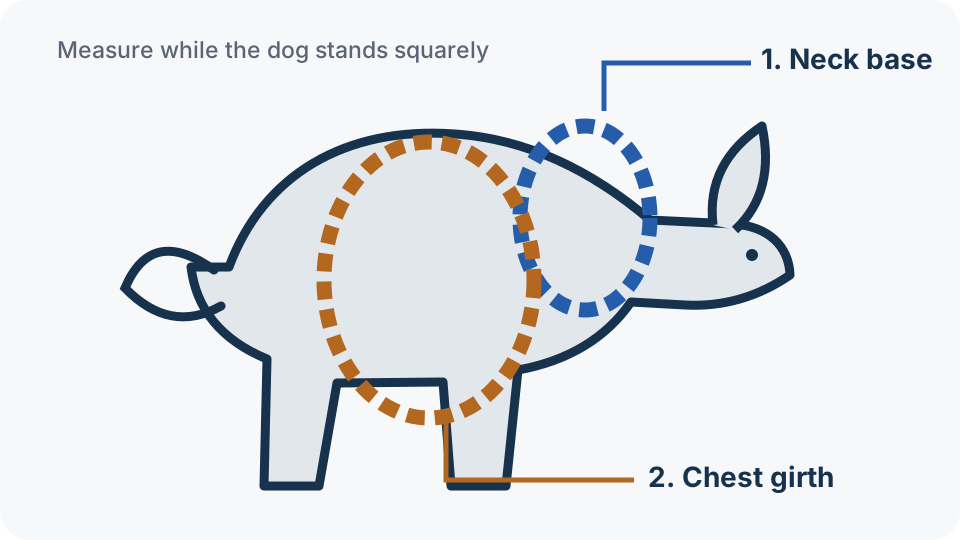
Use a soft tape while the dog stands squarely. Measure the neck at the base where the harness sits, then wrap the tape around the widest part of the ribcage just behind the front legs. Record both numbers and buy only a manufacturer size range that contains both. Weight alone is not a harness measurement.
Equipment
You need a flexible sewing tape, paper or a phone note, and the current size chart for the exact harness model. A non-stretch string can substitute for the tape if you mark it and measure it against a ruler. Measure over the coat the dog will normally wear; a dense seasonal coat can change the result.
Measure the base of the neck
Place the tape low around the neck, near the shoulders, rather than high where a flat collar sits. Keep it level and snug without compressing coat or skin. Record the number, repeat it, and use the larger result if the dog moved.
Measure chest girth
Find the widest part of the ribcage, usually a few centimeters or about two finger widths behind the forelegs. Run the tape vertically around the body. It must not slide into the armpits or angle toward the waist. Take the measurement during normal breathing, not while the dog is panting hard.
Read overlapping size ranges
Manufacturers use different patterns, so there is no universal XS-to-XL table. If both neck and chest land in one range, start there. If they fall into different sizes, do not guess from weight. Choose a more adjustable model or contact the manufacturer with both numbers. At a boundary, compare adjustment range and return policy before buying.
Fit check after purchase
- Fit two fingers beneath a strap where appropriate without being able to lift the harness over the dog's head.
- Confirm the front assembly leaves the shoulder blades free through a full walking stride.
- Keep straps out of the armpit and elbow fold; check for warmth, redness or broken hair after a short walk.
- Hold the leash securely and apply gentle backward pressure. The dog must not be able to reverse out.
- Check breathing, coughing and gagging. Pressure should not concentrate on the throat.
Puppies and changing coats
Remeasure a growing puppy every few weeks and after a visible growth spurt. Recheck long-coated dogs after grooming and before winter if the coat thickens. A harness that fitted last season may now restrict movement or allow escape.
Frequent measuring errors
Do not measure only a flat collar, pull the tape tight enough to flatten the coat, use an old body weight as the size, or assume two models from one brand fit alike. Another common error is testing fit while the dog stands still but never checking a turn, sit and backward step.
Final check
The correct answer to How To Measure A Dog For A Harness Complete Guide is two body measurements plus a movement test. Keep the packaging until the dog has walked indoors without rubbing or backing out; return the harness if neck and chest cannot both be secured without restricting the shoulders.
Failure-mode table for How To Measure A Dog For A Harness Complete Guide
| Failure | Early warning | Safer backup |
|---|---|---|
| power or signal disappears | delayed updates, low-battery alerts or app errors | physical identification, leash and secure barrier |
| fit changes during motion | rotation, rubbing, coughing or a shortened stride | stop, refit and use a different pattern if needed |
| hardware opens or breaks | bent clip, frayed webbing or cracked housing | redundant attachment and immediate replacement |
| the dog panics | freezing, frantic escape or redirected behavior | remove pressure, create distance and seek qualified help |
| terms or service change | missing features or unexpected renewal cost | verify current terms and keep non-connected alternatives |
Use the How To Measure A Dog For A Harness Complete Guide table before relying on the product in a higher-risk setting. A good purchase is not one that never fails; it is one whose likely failures are visible, recoverable and backed up.
Current details to verify for How To Measure A Dog For A Harness Complete Guide
Prices, model names, subscription tiers, firmware, compatible phones, coverage maps, battery estimates, return windows and warranty terms can change. Before buying for How To Measure A Dog For A Harness Complete Guide, verify each item on the current manufacturer or retailer page and save the version that influenced the purchase. Check whether a free feature becomes paid, whether cancellation is self-service, who pays return shipping and whether opened or fitted products remain returnable.
Treat performance estimates as conditions rather than promises. Battery life changes with update rate, temperature, signal and age; range changes with terrain and obstruction; water-resistance ratings do not make damaged seals permanent. The useful comparison for How To Measure A Dog For A Harness Complete Guide states the conditions the household can reproduce. Unsupported superlatives and old prices should not decide a safety purchase.
Maintenance record for How To Measure A Dog For A Harness Complete Guide
Set a recurring inspection that matches the product. In a How To Measure A Dog For A Harness Complete Guide record, note cleaning, charging, strap adjustment, skin checks, software updates and any connection or hardware failure. Wash fabric according to its material, keep grit out of closures and dry equipment before storage. Replace safety-critical items when stitching, plastic or metal shows damage rather than waiting for a complete break.
Remeasure puppies, dogs that gain or lose weight and long-coated dogs after major grooming changes. Recheck fit after washing because webbing and padding can behave differently. If a product repeatedly needs correction during an ordinary outing, it is not functioning reliably for that dog. The record turns vague frustration with How To Measure A Dog For A Harness Complete Guide into evidence for an adjustment, warranty claim, return or different design.
Humane-use boundary for How To Measure A Dog For A Harness Complete Guide
Equipment should support a taught behavior, not try to suppress fear or pain. For How To Measure A Dog For A Harness Complete Guide, stop when the dog freezes, avoids handling, vocalizes, scratches continuously, redirects toward a person or animal, or becomes more frantic with repetition. Increasing intensity can hide warning behavior without resolving its cause. A sudden change in tolerance also deserves a pain and health check.
Choose reward-based instruction and environmental management for training problems. Dogs with aggression, panic, repeated escape or medically complicated behavior need individual help rather than a stronger device. A humane How To Measure A Dog For A Harness Complete Guide decision includes the option not to use the category at all. Convenience never outweighs breathing, free movement, intact skin and the ability to retreat from overwhelming pressure.
Review point for How To Measure A Dog For A Harness Complete Guide
Set a date to revisit the decision and name the observation that would bring the review forward. For How To Measure A Dog For A Harness Complete Guide, a meaningful trigger might be discomfort, repeated equipment failure, a change in health or behavior, a household routine that no longer meets the dog's needs, or reliable new evidence. Record the current choice and its largest accepted limitation so the later review compares reality with the reason for choosing it.
A review is not an admission that the first decision failed. Dogs, products, services and households change. Keep what continues to work, replace assumptions with direct observation and involve a veterinarian or appropriately qualified professional when health, welfare or serious behavior is involved. How To Measure A Dog For A Harness Complete Guide remains useful only while the plan is safe for the individual dog and sustainable for the people responsible for it.
Share the plan for How To Measure A Dog For A Harness Complete Guide
Make sure every person who handles the dog understands the same cues, fit checks, boundaries and stop rules. In How To Measure A Dog For A Harness Complete Guide, inconsistent handling can make an ordinary difficulty look unpredictable. Write a short handoff note covering the routine, the dog's known sensitivities, the backup equipment or contact, and the signs that mean the session should end. Test whether another adult can follow it without verbal explanation.
Include sitters, walkers and family members who may encounter the difficult scenario. Store emergency contacts and current care information where they can be found without unlocking this page. A shared plan reduces preventable mistakes and reveals when the proposed solution depends too heavily on one person's skill. That is a practical final check before relying on the recommendation in How To Measure A Dog For A Harness Complete Guide.
Keep the conclusion proportionate in How To Measure A Dog For A Harness Complete Guide
Use the evidence to narrow choices, not to promise an outcome. For How To Measure A Dog For A Harness Complete Guide, breed tendencies, measurements, population ranges and product features all have limits; the individual dog and current conditions remain decisive. Prefer a conclusion that names who may benefit, who should avoid the option and what must be verified next. That structure is more honest than a universal winner.
If two choices remain close, favor the one with the safer failure mode and the simpler routine. Delay the decision when essential records, measurements or professional guidance are missing. The goal of How To Measure A Dog For A Harness Complete Guide is a choice that can be explained, monitored and changed responsibly—not confidence for its own sake.