Flying With a Dog in 2026: Airline, Crate, Health & International Travel Checklist
Flying with a dog is not one set of rules.
A trip can involve separate requirements from:
- airline;
- departure country;
- destination country;
- transit country;
- airport;
- U.S. CDC;
- USDA APHIS;
- veterinary authorities.
Rules can change faster than ordinary evergreen content. Always verify them for the exact route immediately before travel.
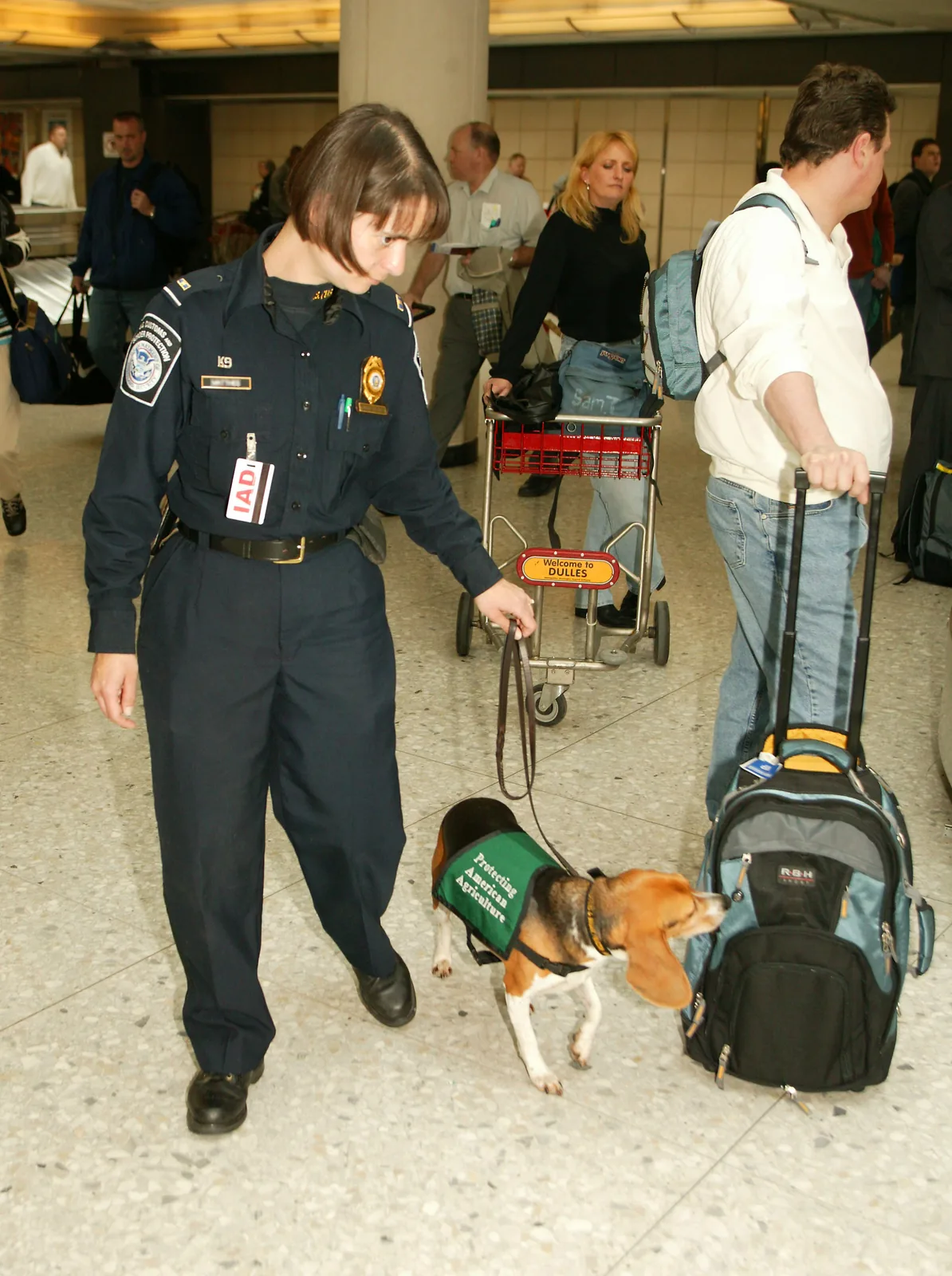
Image note: the hero photograph shows a U.S. Customs and Border Protection working dog at an airport. It illustrates airport animal operations; it is not a picture of a pet traveling in the cabin.
Start with one question: cabin or checked/cargo transport?
Cabin
Small dogs may be accepted in an airline-approved carrier under the seat.
Limits commonly involve:
- carrier dimensions;
- combined dog/carrier weight;
- number of pets per flight;
- reservation fee;
- age;
- destination restrictions.
Never assume a dog can fly in-cabin because another airline allowed it last year.
Hold/cargo transport
Larger dogs may need to travel through an airline's live-animal program.
Some airlines do not transport pets in the hold at all.
Weather embargoes, breed restrictions, aircraft type and route can affect availability.
Book the dog before buying a nonrefundable ticket
Pet spaces can be limited.
Before paying:
- choose the route;
- call/check the airline's current pet policy;
- confirm the dog is accepted on that flight/aircraft;
- record carrier/crate dimensions;
- ask about fees;
- ask about transfer/connection rules;
- confirm destination restrictions.
Save written confirmation where possible.
International travel: start months ahead
Some destinations require:
- microchip;
- rabies vaccination after microchip;
- waiting periods;
- rabies antibody titer;
- import permit;
- parasite treatment;
- government-endorsed health certificate.
The sequence can matter.
A vaccination performed before an accepted microchip date may not satisfy a destination's rules.
U.S. entry requirements in 2026
CDC currently requires a CDC Dog Import Form for each dog entering the United States.
Requirements differ according to whether the dog has been in a country considered high risk for dog rabies during the previous six months.
For dogs coming from dog-rabies-free or low-risk countries, CDC's current guidance centers on the import-form receipt, plus general entry conditions.
Dogs with recent high-risk-country travel can require additional documentation.
Use CDC's Dog Importation Navigator for the current route.
Age and microchip
Current CDC requirements for certain U.S. entries include that dogs be at least six months old and have a detectable microchip.
Do not generalize that into every country's rule. Check the destination.
Leaving the U.S.
USDA APHIS maintains country-specific export requirements.
When an endorsed veterinary health certificate is required, a USDA-accredited veterinarian may need to prepare it and USDA may need to endorse it.
Some documents cannot be created retroactively after departure.
Transit countries can create hidden requirements
A layover may be more than a flight change.
Ask:
- Will the dog clear customs?
- Will it leave the sterile transit area?
- Is a transit health certificate required?
- Does the airline transfer animals between flights?
- Is an overnight kennel needed?
A "two-hour connection" can create regulatory complexity.
Crate training should begin before travel
Do not introduce a travel crate for the first time at airport check-in.
Build comfort:
- crate open in home;
- meals/treats inside;
- short closed-door sessions;
- quiet rest;
- movement/vehicle practice;
- progressively longer calm periods.
The goal is a familiar resting place, not forced confinement.
Crate size
For hold travel, follow current airline/IATA guidance.
Generally, a dog should be able to:
- stand naturally;
- turn around;
- lie down comfortably.
Exact construction, ventilation, fastener and water requirements depend on carrier and route.
Should a dog be sedated for a flight?
Do not sedate a dog for air travel without explicit veterinary and airline guidance.
Sedatives can affect:
- blood pressure;
- balance;
- temperature regulation;
- breathing.
Some airlines restrict sedated animals.
If a dog has severe travel anxiety, discuss the exact itinerary with a veterinarian well before departure.
Brachycephalic dogs
Short-faced dogs can have increased breathing/heat-management challenges.
Airlines may restrict certain brachycephalic breeds from hold transport.
A veterinary fitness assessment and route/temperature planning are especially important.
Weather
Extreme heat and cold can interrupt live-animal transport.
Consider:
- departure temperature;
- arrival temperature;
- connection city;
- time on tarmac;
- seasonal embargoes.
A safe route in April may not be available in August.
Food and water
Follow airline and veterinary guidance.
Avoid a huge meal immediately before travel.
For long travel, plan:
- water access;
- required attached bowls;
- feeding instructions;
- delays.
Do not experiment with new food on travel day.
Airport-day checklist
- booking confirmation;
- dog identification;
- microchip details;
- health documents;
- rabies documents;
- import permit if required;
- CDC form receipt for U.S. entry where relevant;
- airline-compliant carrier/crate;
- absorbent material;
- attached water/food equipment where required;
- leash/harness for controlled handling;
- destination contact/transport plan;
- digital and printed document copies.
In-cabin behavior
A dog that fits under the seat still needs to cope with:
- crowds;
- announcements;
- rolling luggage;
- security handling;
- long confinement;
- unfamiliar smells.
Practice carrier time before the trip.
Follow airport rules on when the dog may leave the carrier.
Service animals are not ordinary pets
Airline rules for trained service animals are separate from ordinary pet policies and vary by jurisdiction.
Do not misrepresent a pet as a service animal.
Returning home can be harder than leaving
Before departure, check the return requirements too.
A dog may be allowed into the destination country yet need additional documentation to come back.
This is particularly important for U.S.-vaccinated dogs traveling to a country designated high-risk for dog rabies.
How far ahead should you plan?
Domestic uncomplicated trip
Start several weeks ahead.
International trip
Start 3–6 months ahead, sometimes more.
Waiting periods or blood tests can make last-minute compliance impossible.
Current-information workflow
Immediately before travel, verify:
- airline;
- destination veterinary authority;
- transit-country rules;
- USDA APHIS if departing U.S.;
- CDC if entering U.S.;
- veterinarian.
Do not rely on a blog—including this one—as the final regulatory source.
Bottom line
Successful dog air travel is mostly preparation.
The hardest problems usually come from:
- wrong sequence of vaccine/microchip;
- missing government form;
- outdated airline assumptions;
- crate incompatibility;
- transit rules;
- late planning.
Use TopDogSite for the planning framework, then verify every regulatory detail with official sources for the actual itinerary.
Related TopDogSite guides
Sources & further reading
- https://www.cdc.gov/importation/dogs/dog-import-form-instructions.html
- https://www.cdc.gov/importation/dogs/dog-importation-navigator.html
- https://www.cdc.gov/importation/dogs/index.html
- https://www.aphis.usda.gov/pet-travel
- https://www.aphis.usda.gov/pet-travel/pet-travel-process-overview
- https://www.aphis.usda.gov/pet-travel/us-to-another-country-export