German Shorthaired Pointer: Temperament, Exercise, Training & Health
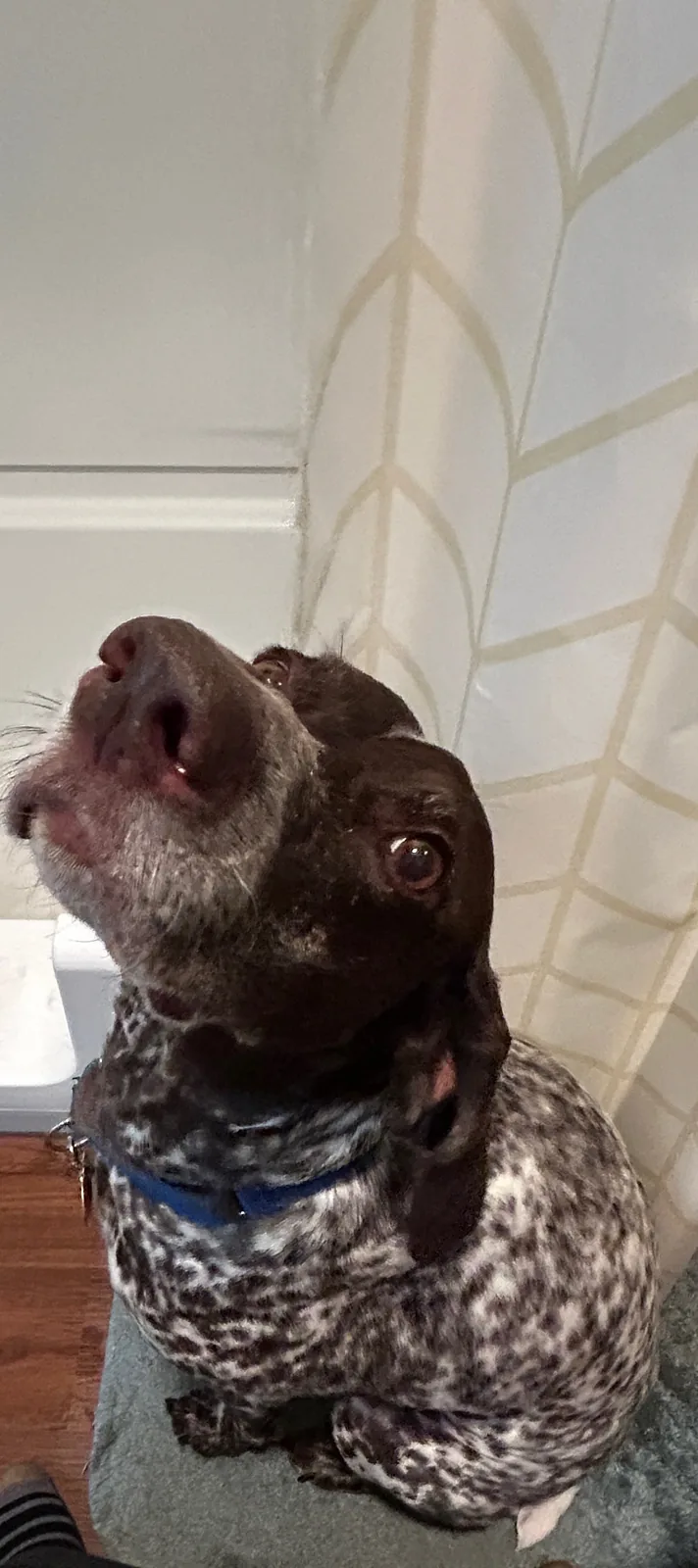
Quick facts
| Trait | German Shorthaired Pointer |
|---|---|
| AKC group | Sporting |
| Height | Males 23–25 in; females 21–23 in |
| Weight | Males 55–70 lb; females 45–60 lb |
| Life expectancy | 10–12 years |
| Exercise | Very high |
| Trainability | High, especially with purposeful reward-based work |
| Grooming | Low to moderate |
| Shedding | Yes; short hair is still visible around the home |
| Prey/hunting drive | Commonly high |
| Apartment fit | Possible only with an unusually committed active routine; not an easy apartment breed |
| First-time-owner fit | Moderate to low for a casual owner; better for a highly active, training-oriented beginner |
| Best fit | Active outdoors/sporting households that want the dog involved in daily activity |
Direct answer
A German Shorthaired Pointer is an excellent dog for an owner who genuinely wants an athletic companion and can provide substantial daily exercise, training and interaction. It is a poor choice for someone attracted mainly by the sleek appearance but expecting a dog to relax after a short walk.
The breed was built for versatile field work. That history still appears in modern GSPs as speed, stamina, scent interest, retrieving behavior, responsiveness to training and a strong desire to be doing something with their people.
Temperament
GSPs are commonly energetic, enthusiastic and strongly attached to their household. Many are affectionate at home and intense outside. That combination is part of their appeal: the same dog can want close family contact and then cover ground rapidly when given the chance to work.
Individual breeding lines matter. A field-bred dog selected for competitive hunting performance may be more intense than a lower-drive companion/show line. Ask breeders what their adult dogs actually do and what level of daily activity their puppies typically need.
Exercise: the defining ownership requirement
Exercise is not a side note for this breed. It is one of the main selection criteria.
A mature, healthy GSP may enjoy:
- running with a conditioned owner;
- long hikes;
- field training;
- retrieving;
- swimming;
- scent work;
- tracking;
- agility;
- obedience/rally;
- hunt tests and field events;
- structured play that requires searching and problem solving.
A slow 20-minute neighborhood walk is valuable social exposure but is rarely the whole exercise plan for an energetic young adult GSP.
Do not force endurance work on an immature puppy. Growth, conditioning, weather and individual health should determine exercise progression.
Heat and exertion
GSPs are athletic, but athletic dogs can still overheat. In hot or humid weather, reduce intensity, provide water and shade and watch recovery closely. Dark-coated dogs in direct sun may absorb substantial heat.
Do not assume a fit hunting dog is immune to heat illness.
Training
The breed learns quickly and generally responds well to positive, consistent training. Because GSPs can be fast and environmentally focused, start foundation skills early.
Priority behaviors:
Recall
A hunting dog following scent or movement can cover distance rapidly. Build recall with high-value reinforcement and gradually increase distraction. Use a long line or secure field while the behavior is still unreliable.
Loose-leash walking
A fit GSP can pull hard. Teach leash mechanics before strength and speed peak in adolescence.
Settle/off-switch
Do not only teach activity. Reinforce resting on a mat, calm handling and quiet behavior after needs have been met.
Leave/drop
Useful for a dog with retrieving and hunting interest.
Cooperative handling
Teach calm examination of ears, feet, mouth and body for routine veterinary and grooming care.
Prey drive and other animals
Because the breed was developed to find and pursue game, some GSPs have significant interest in birds and small animals.
That does not mean every GSP cannot live with cats, but breed history should be taken seriously. Successful cat households are more likely when the individual dog has an appropriate temperament, early exposure is thoughtful and introductions are managed.
Do not assume friendship with one household cat means the dog will generalize that behavior to outdoor cats or wildlife.
Children and family life
Many GSPs are affectionate family dogs. Their biggest challenge around young children is often physical intensity rather than deliberate aggression: a young dog can run, jump, mouth and collide at high speed.
Supervise interactions and teach both child and dog appropriate behavior.
A family that hikes, runs, trains and spends time outdoors can be an excellent fit. A household that wants a calm dog while everyone is away for long workdays is much harder.
Can a GSP live in an apartment?
Yes in the literal sense, but square footage is not the real question.
A highly active owner who runs, trains and gives the dog structured outdoor time may keep a GSP successfully in an apartment. A sedentary owner with a large yard may still fail the dog's needs.
For most apartment shoppers wanting an easy companion, there are simpler breeds.
Grooming
The coat is short and relatively easy to maintain.
Routine care:
- brush every few days to remove loose hair;
- bathe when actually dirty;
- check ears, especially after swimming;
- keep nails short;
- inspect feet/skin after field work, brush and rough terrain.
Short coat does not mean no shedding.
Health screening: what to verify
The current AKC/German Shorthaired Pointer Club health-testing guidance lists:
- hip evaluation;
- elbow evaluation;
- cardiac examination;
- ophthalmologist evaluation;
- DNA testing for cone degeneration.
Do not accept "vet checked" as a substitute for documented breeding-stock health screening.
The OFA/CHIC system can help buyers verify that recommended tests were performed. A CHIC number means the required results were completed and made public; it does not mean every test result was normal, so read the actual results.
Bloat/GDV awareness
As a deep-chested, athletic medium-large dog, a GSP owner should know the signs of gastric dilatation-volvulus and have an emergency plan. Sudden unproductive retching, severe restlessness, abdominal distension, weakness or collapse requires urgent veterinary care.
Suspected GDV should not be treated at home; it is a surgical emergency that needs immediate veterinary care.
Hunting and sporting history
German hunters developed the GSP in the nineteenth century as a versatile gun dog rather than a single-purpose specialist. The breed was expected to locate game, point, track and retrieve on land and in water.
That versatility explains why modern GSPs appear in multiple field and dog-sport disciplines and why many pet GSPs are happiest when given a job.
What a good day with a GSP looks like
An appropriate adult routine may combine:
- meaningful morning activity;
- short training blocks;
- sniffing/searching;
- household downtime;
- another active session later;
- social time with the owner.
The exact number of minutes is less useful than whether the individual dog is physically fit, mentally satisfied and capable of settling at home.
Best for
- runners, hikers and active outdoor households;
- hunters and pointing-dog enthusiasts;
- people who enjoy dog training and sports;
- owners who want a dog involved in their daily life.
Think twice if
- you want a low-energy dog;
- the dog will routinely be alone for very long periods;
- reliable daily exercise is uncertain;
- strong prey interest would be incompatible with the household;
- your only attraction is the breed's appearance.
Pros
- highly athletic;
- trainable;
- versatile;
- relatively simple grooming;
- strong potential as an active companion;
- many avenues for sport and enrichment.
Challenges
- substantial daily exercise requirement;
- adolescence can be intense;
- hunting/prey drive requires management;
- recall must be trained seriously;
- boredom can turn into destructive or frantic behavior;
- not naturally an easy fit for sedentary homes.
FAQ
Are German Shorthaired Pointers good family dogs?
They can be excellent family dogs for active households that provide training and exercise. Their energy and speed mean young dogs still need close supervision around small children.
Are GSPs good for first-time owners?
A highly committed, athletic first-time owner can succeed, especially with training support. A person who wants an easy first dog requiring only casual walks should choose something less demanding.
Do German Shorthaired Pointers shed?
Yes. The coat is short and easy to brush, but short hairs are still shed.
Can a German Shorthaired Pointer run with me?
A mature, healthy, appropriately conditioned GSP can be an excellent running partner. Build duration gradually and discuss strenuous exercise with a veterinarian, especially before structured distance running begins.
Are GSPs good with cats?
Some live successfully with cats, but the breed's hunting background means prey interest cannot be ignored. Individual temperament, early exposure and management matter.
How much exercise does a GSP need?
There is no single safe minute number for every dog. Expect a high daily need for both physical activity and mental work, adjusted for age, weather, conditioning and health.
Sources & further reading
- AKC — German Shorthaired Pointer
- AKC — Sporting Group Health Testing Requirements
- GSPCA — CHIC Health
- GSPCA — Health
- OFA — CHIC Programs