Why Do Dogs Lick Their Paws? Allergies, Irritation, Injury & Other Causes
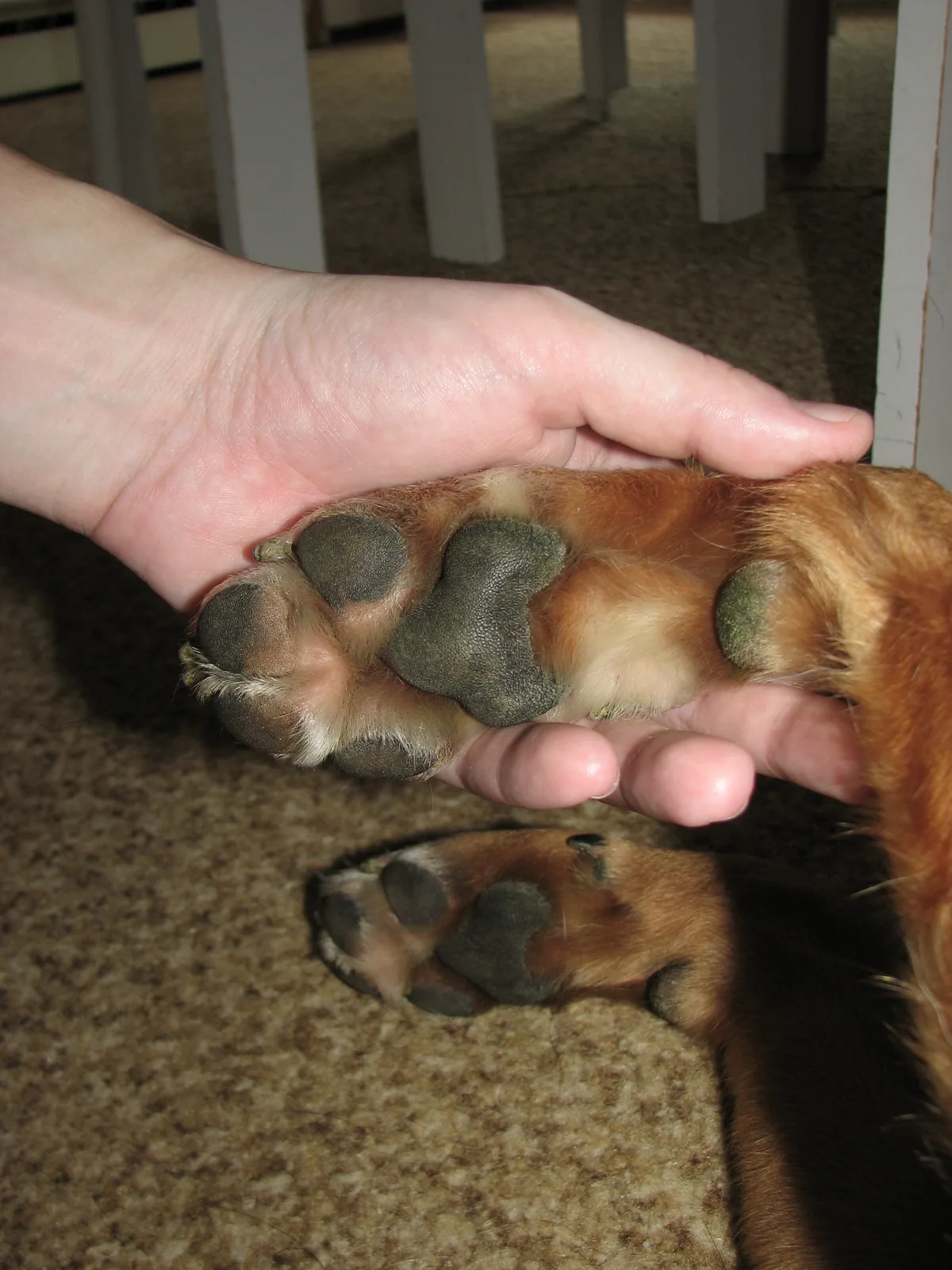
A few licks after a walk can be ordinary grooming.
Persistent paw licking is different.
When a dog repeatedly chews or licks one foot—or all four—the behavior can reflect itch, pain, irritation, infection, foreign material or a behavioral pattern.
The distribution matters.
One paw vs several paws
One paw
A problem affecting one foot raises possibilities such as:
- cut;
- torn nail;
- insect sting;
- grass awn/foreign body;
- burn;
- localized infection;
- orthopedic pain.
Several paws
Repeated licking of multiple feet can be associated with:
- environmental allergy;
- skin disease;
- contact irritation;
- parasites;
- bacterial or yeast overgrowth;
- some food-related reactions.
This is not a diagnostic rule, just a useful clue.
Check the paw safely
If the dog is comfortable with handling, look for:
- redness;
- swelling;
- broken nail;
- bleeding;
- crack;
- blister;
- discharge;
- odor;
- object between toes;
- thorn/grass material;
- bald patch;
- raw skin.
Stop if the dog is painful or may bite.
A deeply embedded object or painful nail injury deserves professional care rather than digging around with tools.
Allergies are a common reason for itchy feet
Environmental allergy can involve pollen, grasses, weeds, dust mites and other allergens.
Dogs with allergy-related skin disease may also have:
- itchy ears;
- recurrent ear infections;
- belly/groin itch;
- face rubbing;
- recurrent skin infection.
AKC's current allergy guidance notes that true food allergy is less common than many owners assume, although itchy paws/ears and gastrointestinal signs can occur in affected dogs.
Do not diagnose "chicken allergy" from paw licking alone.
Contact irritation
Feet directly contact:
- grass;
- cleaning products;
- road salt/de-icer;
- pesticides;
- hot pavement;
- rough surfaces.
Rinsing paws with clean water after exposure and drying gently may help remove surface irritants, but persistent inflammation still needs evaluation.
Infection can be cause and consequence
Inflamed itchy skin encourages licking.
Licking adds:
- moisture;
- trauma;
- disruption of skin barrier.
That can contribute to secondary bacterial or yeast infection, creating a cycle.
Signs include:
- odor;
- greasy debris;
- discharge;
- marked redness;
- swelling;
- sores.
Do not repeatedly apply human antiseptics or creams without veterinary guidance. Some products irritate skin or are unsafe if licked.
Parasites
Fleas, mites and other parasites can cause itching. Feet may not be the only area affected.
Parasite prevention and diagnosis depend on region, lifestyle and the individual dog.
Pain
Dogs sometimes lick an area because it hurts rather than itches.
Pain can originate from:
- toe;
- nail;
- joint;
- tendon;
- soft tissue.
If the dog is limping or resists weight-bearing, think beyond allergy.
Behavioral licking
Repetitive licking can become a learned or compulsive pattern, particularly in dogs experiencing:
- stress;
- frustration;
- insufficient enrichment;
- underlying anxiety.
But behavioral explanations should come after medical causes are considered, not instead of them.
Why white fur turns pink or brown
Saliva contains pigments called porphyrins. Repeated licking can stain light-colored fur pink, rust or brown.
The color does not itself diagnose yeast or allergy.
It tells you the area has been repeatedly wet with saliva.
When paw licking needs a veterinary appointment
Arrange assessment when you see:
- persistent daily licking;
- bleeding;
- open sores;
- swelling;
- foul odor;
- pus/discharge;
- limping;
- painful handling;
- nail injury;
- recurrent ear/skin problems;
- licking that keeps the dog awake;
- sudden severe onset;
- suspected foreign body.
Urgent care is appropriate for severe injury, uncontrolled bleeding or marked pain.
What you can do while arranging care
Safe short-term steps may include:
- prevent further licking with a suitable cone/protective method when recommended;
- rinse obvious surface dirt/irritant with clean water;
- keep the foot clean and dry;
- stop exposure to suspected lawn/cleaning chemicals;
- record photos.
Do not delay care for an embedded foreign body or severe inflammation.
Should I use an elimination diet?
Not casually.
A legitimate food-allergy diet trial is usually structured, prolonged and strict. Randomly switching between commercial proteins can make interpretation harder.
If food allergy is suspected, work with a veterinarian on an appropriate elimination-challenge plan.
Could it be the grass?
Grass can contribute in several ways:
- pollen allergy;
- contact irritation;
- awns/seed heads;
- lawn chemicals.
A dog that develops itchy feet seasonally after outdoor exposure may need a skin/allergy workup rather than permanent avoidance of all grass.
Paw-care routine
For dogs prone to foot problems:
- inspect after rough terrain;
- rinse after salt/chemical exposure;
- dry between toes;
- keep nails maintained;
- trim excessive paw hair when appropriate;
- monitor seasonal patterns.
Bottom line
Paw licking is a symptom, not a diagnosis.
Ask:
- one paw or many?
- itchy or painful?
- seasonal or constant?
- normal skin or inflamed?
- any limping?
- any ear/skin issues elsewhere?
Persistent licking deserves investigation because repeated self-trauma can turn a small problem into a painful one.
Related TopDogSite guides
Sources & further reading
- https://www.akc.org/expert-advice/health/why-does-my-dog-lick-chew-paws/
- https://www.akc.org/expert-advice/health/pododermatitis-in-dogs/
- https://www.akc.org/expert-advice/health/dog-allergies-symptoms-treatment/
- https://www.akc.org/expert-advice/health/why-is-my-dogs-fur-changing-color/
This article provides general dog-health information and is not a veterinary diagnosis. Contact a veterinarian for advice about an individual dog.