Dog Body Language: How to Read Stress, Play, Fear & Comfort Signals
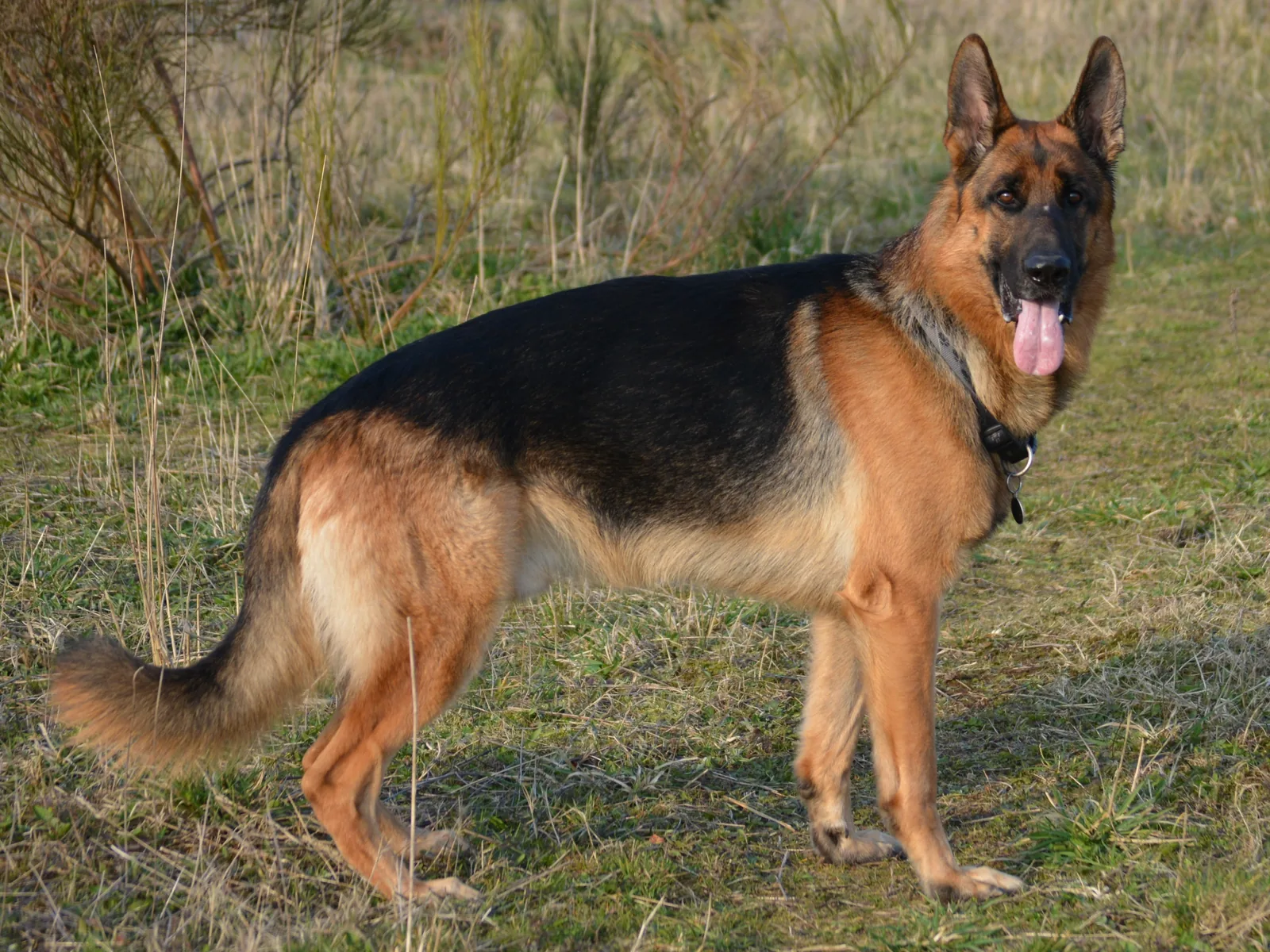
Dogs communicate continuously, but humans often focus on a single feature—especially the tail.
That creates mistakes.
A wagging tail does not always mean "friendly." A growl does not automatically mean "aggressive." A dog rolling over does not always request a belly rub.
Read the whole dog + context + change from normal behavior.
Start with baseline
Before interpreting a signal, know what the dog normally looks like.
Breed anatomy changes appearance:
- a Pug's tail naturally curls;
- a Greyhound may carry the tail lower;
- cropped or very small ears are harder to read;
- heavy facial hair can hide eyes;
- a short muzzle changes mouth appearance.
The most useful clue is often a change from that individual's relaxed baseline.
Relaxed body language
A comfortable dog may show:
- loose muscles;
- soft eyes;
- relaxed mouth;
- natural ear position;
- neutral tail carriage;
- curved rather than stiff movement;
- normal exploration;
- ability to sniff and disengage.
Relaxation looks fluid.
Stress signals
Possible stress or conflict signals include:
- lip licking when no food is present;
- yawning outside normal tiredness;
- turning head away;
- showing more eye white;
- paw lift;
- sudden scratching;
- shake-off;
- panting unrelated to heat/exercise;
- tucked tail;
- lowered body;
- freezing;
- repeated attempts to leave.
One signal alone is not a diagnosis. Look for clusters and context.
Freezing matters
People often notice barking and growling but miss stillness.
A dog that suddenly becomes rigid and stops moving may be communicating intense discomfort.
Do not use the freeze as an opportunity to move closer.
Create space.
Tail wagging
Look at:
- height;
- stiffness;
- speed;
- width;
- whole-body movement.
A broad loose wag with relaxed hips is different from a high, tight, rapid wag on a stiff body.
Tail movement signals arousal and communication—not a universal promise of friendliness.
Eyes
Comfortable eyes are generally soft.
Concerning changes may include:
- hard stare;
- fixed gaze;
- widened eyes;
- visible sclera ("whale eye");
- rapid scanning;
- avoidance paired with tension.
Direct eye contact means different things depending on relationship and situation.
Ears
Ear position can show attention and emotional change, but breed shape limits interpretation.
Watch whether ears move:
- forward and stiff;
- backward;
- flattened;
- rapidly between sounds.
Combine this with mouth, tail and posture.
Mouth
A relaxed dog may have a soft open mouth.
Stress can look like:
- tightly closed mouth;
- repeated lip licking;
- panting when not hot;
- corners of mouth pulled back;
- wrinkled muzzle;
- teeth display.
A yawn may be simple tiredness or stress depending on context.
Growling is information
Do not automatically punish a growl.
Growling can say:
- "I am uncomfortable";
- "give me space";
- "I am afraid";
- "stop handling me";
- "this resource matters to me."
If punishment suppresses the warning without changing the emotion, the dog may become less communicative while still uncomfortable.
Manage the situation and address the cause.
Play signals
Healthy play often includes:
- play bow;
- loose bouncing movement;
- role reversals;
- pauses;
- self-handicapping;
- voluntary re-engagement.
Good play should allow both dogs to take breaks.
If one dog repeatedly tries to escape and the other will not stop, the interaction needs intervention.
Fear
Fear may look dramatic:
- fleeing;
- barking;
- growling.
Or quiet:
- freezing;
- hiding;
- crouching;
- refusing food;
- avoiding eye contact.
A quiet fearful dog is still fearful.
"Guilty" behavior
A lowered posture, avoiding gaze or appeasing behavior after an owner sees damage is often the dog responding to the owner's emotional cues and context.
Do not assume it proves a human-like understanding of a past rule violation.
Children and body language
Children should be taught not to:
- climb on dogs;
- hug tightly;
- disturb sleep;
- take food/toys;
- corner a dog;
- follow a dog trying to leave.
Adults should intervene before the dog has to escalate communication.
When petting a dog
A useful consent-style interaction:
- pet briefly;
- stop;
- see what the dog chooses.
If the dog moves closer or solicits more contact, continue.
If the dog turns away, leaves or becomes tense, respect the pause.
At the veterinarian or groomer
Stress signals can become easier to see in handling situations.
Teach cooperative care at home and tell professionals if the dog has known fears.
Sedation or medication can sometimes be kinder than forcing a terrified animal through necessary care; that decision belongs with a veterinarian.
Body language around other dogs
Do not let dogs "work it out" simply because neither has bitten.
Watch for:
- repeated stiffness;
- guarding;
- persistent mounting;
- one-sided chasing;
- pinning without release;
- blocked escape;
- hard staring.
Interrupt early and calmly.
What to do when you see stress
- increase distance;
- reduce intensity;
- stop forced interaction;
- give the dog an escape option;
- use food if the dog can comfortably eat;
- reassess the environment.
If concerning behavior is frequent or escalating, seek qualified help.
Bottom line
Dog body language is not a dictionary where one movement always has one meaning.
Read:
whole body + context + baseline + change over time
Learning to notice subtle discomfort before it becomes barking, lunging or biting can improve both safety and the dog's sense of control.