Doberman Pinscher: Temperament, Exercise, Training, Health & Owner Fit
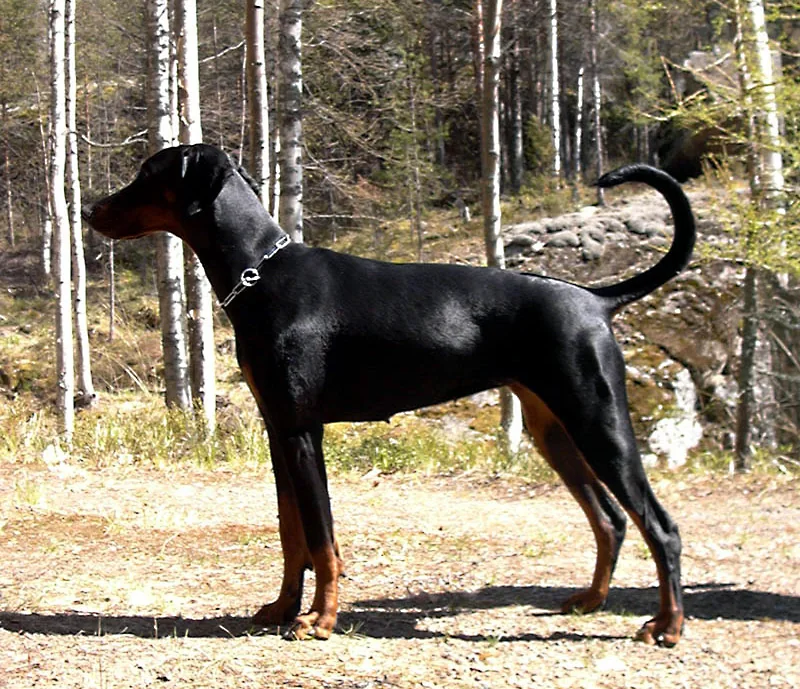
The Doberman Pinscher is a fast, intelligent working dog built to stay close to its handler. That combination explains both the breed's appeal and its difficulty.
A good Doberman is not merely intimidating. It should be trainable, confident, athletic and controllable. The breed tends to thrive with owners who enjoy daily interaction rather than people looking for a yard ornament.
Quick profile
| Trait | Practical level |
|---|---|
| Size | large |
| Exercise | high |
| Trainability | high |
| Guardian instinct | high |
| Grooming | low |
| Shedding | low-moderate |
| Social dependence | high |
| First-time owner fit | possible but demanding |
| Apartment fit | possible with substantial activity/training |
| Heat/cold | short coat offers limited cold protection |
Temperament
Dobermans are commonly described as alert, loyal and highly engaged with their people. Individual lines and dogs vary, so breeder temperament should be evaluated rather than assuming every Doberman has an identical personality.
Fearfulness and uncontrolled aggression are not desirable guardian traits.
Exercise
Most healthy adult Dobermans need a serious daily outlet. Useful activity can combine:
- brisk walking;
- running after conditioning;
- structured play;
- obedience;
- scent work;
- agility or other dog sports;
- controlled exploration.
Puppies need age-appropriate exercise rather than repetitive high-impact conditioning.
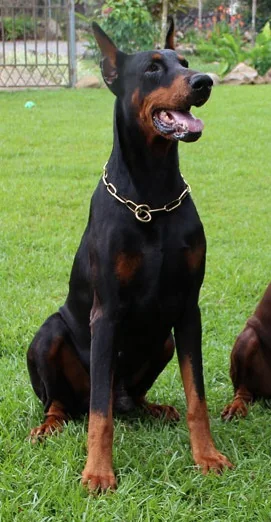
The breed usually learns quickly, which means it learns both good and bad habits quickly.
Priorities:
- leash manners;
- recall;
- settling;
- handling;
- visitor routines;
- leave-it/drop;
- calm neutrality around dogs and people.
Reward-based training can be precise and demanding without relying on intimidation.
Guarding instinct
A Doberman's presence and attentiveness can deter without any special aggression training.
Owners should build confidence and control. If professional protection work is a goal, use qualified professionals who can evaluate temperament and safety.
Family life and children
Many Dobermans live successfully with families. Size, speed and excitement mean supervision is important around small children.
Do not market the breed as a guaranteed "nanny" or automatic child protector.
Other dogs and cats
Compatibility varies. Early experience helps but does not erase individual prey drive or same-sex dog conflict in every dog.
Introduce carefully and manage based on behavior.
Grooming
The short coat is simple:
- routine brushing;
- nail care;
- dental care;
- ear/skin observation;
- bathing as needed.
Cold weather may require practical protection because the coat is thin.
Health screening
Doberman health deserves unusually serious attention.
The Doberman Pinscher Club of America discusses breed risks and responsible screening including cardiac evaluation, von Willebrand disease testing, orthopedic evaluation, thyroid/eye considerations and other health work.
Prospective owners should ask for documented results, not "the vet said the parents are healthy."
Cardiac disease is particularly important in this breed. Ask the parent club and breeder what current screening protocol is being followed rather than relying on a one-time puppy DNA panel as a substitute for adult cardiac evaluation.
Who should get a Doberman?
Good fit:
- active owner;
- enjoys training;
- wants a close companion;
- can manage a large athletic dog;
- values controlled guardian temperament.
Poor fit:
- long routine isolation;
- minimal exercise;
- no interest in training;
- wants an outdoor-only dog;
- chooses mainly for intimidation.
FAQ
Are Dobermans naturally protective?
They are a guardian breed with natural vigilance, but individual temperament varies. Control and stability are more important than encouraging aggression.
Are Dobermans good first dogs?
A committed first-time owner with strong training support can succeed, but there are easier first breeds.
Do Dobermans shed?
Yes, though their short coat is relatively simple to maintain.
How much exercise does a Doberman need?
There is no single safe minute count for every dog. Healthy adults generally need substantial daily physical and mental activity adjusted to age, health, weather and conditioning.