9 Family Guardian Dog Breeds: Protection, Temperament & Household Fit
A family guardian dog has two jobs that can pull in different directions: living safely and predictably with the household while also being alert enough to deter or respond to unusual activity.
That is why "protective" should never be used as a synonym for aggressive. For a family home, the better qualities are stable nerves, trainability, appropriate social behavior, physical control and an owner who can manage the breed responsibly.
No breed guarantees protection, and no breed guarantees safety with children. Genetics matter, but so do breeder selection, early socialization, training, health, daily management and the temperament of the individual dog.
At a glance
| Breed | Guardian style | Training demand | Exercise | Size/strength | Best fit |
|---|---|---|---|---|---|
| German Shepherd Dog | versatile, alert | high | high | high | experienced active homes |
| Doberman Pinscher | close personal guardian | high | high | high | engaged owners who train daily |
| Rottweiler | confident, powerful | high | moderate-high | very high | structured experienced homes |
| Boxer | alert, social, athletic | moderate-high | high | high | active families |
| Giant Schnauzer | territorial working dog | very high | very high | high | serious working-dog homes |
| Cane Corso | strong property/family guardian | very high | moderate-high | very high | experienced large-guardian owners |
| Bullmastiff | imposing, calmer adult style | moderate-high | moderate | very high | owners comfortable managing size |
| Great Pyrenees | independent livestock guardian | high in a different way | moderate | very high | space, fencing, tolerance for barking |
| Anatolian Shepherd Dog | independent territorial guardian | very high | moderate | very high | rural/experienced guardian homes |
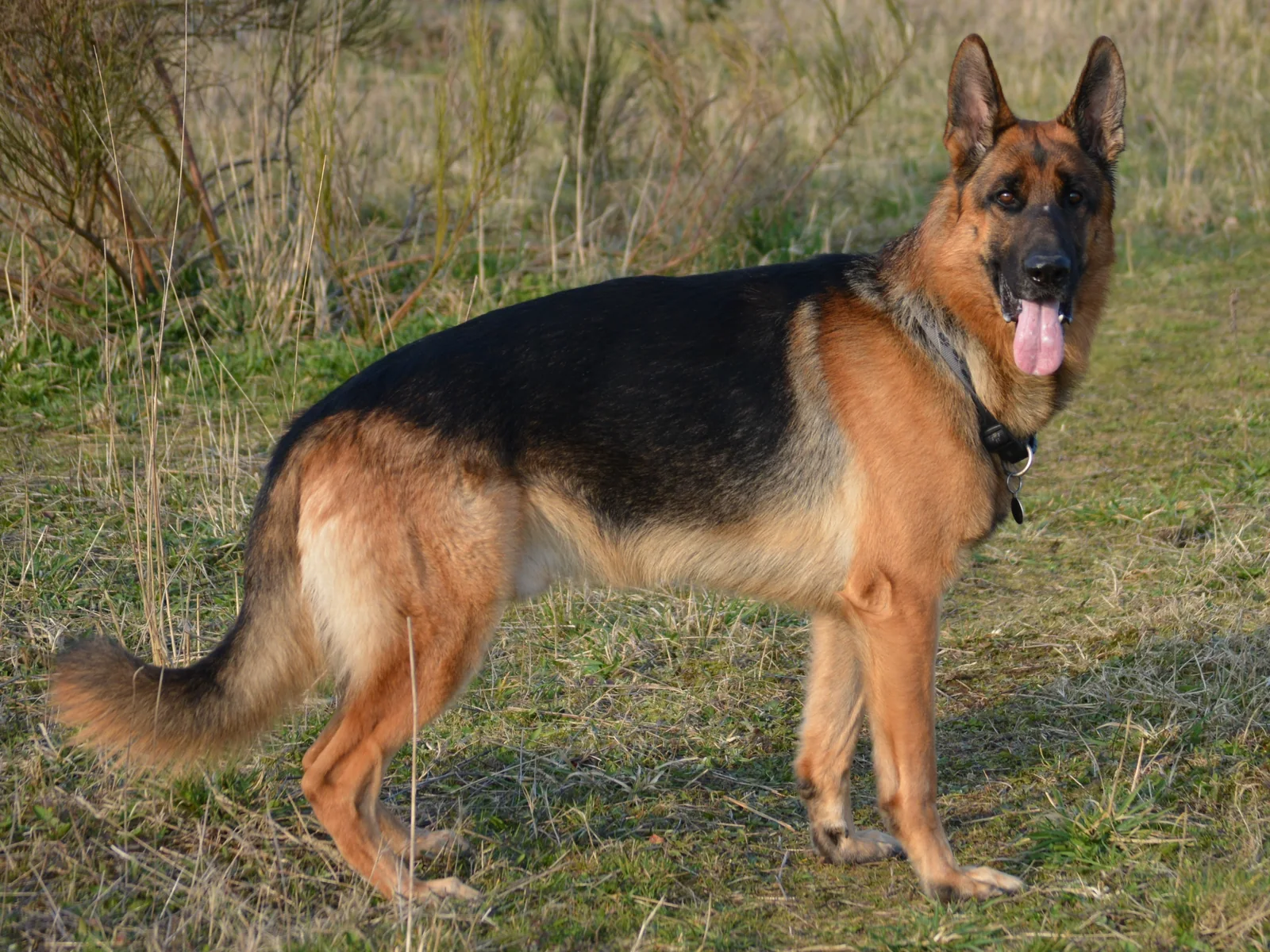
1. German Shepherd Dog — the versatile all-rounder
German Shepherds combine trainability, athleticism and natural attentiveness. That flexibility is why they appear in service, sport, police and working roles as well as family homes.
The strength of the breed is also the responsibility: an under-socialized or poorly managed German Shepherd can become reactive, frustrated or difficult to control. A stable family dog should be able to notice something unusual without treating normal visitors, children, delivery workers and neighborhood activity as threats.
Best for: active owners who enjoy training.
Think twice if: the household wants a low-effort dog or cannot provide structured exercise and social exposure.
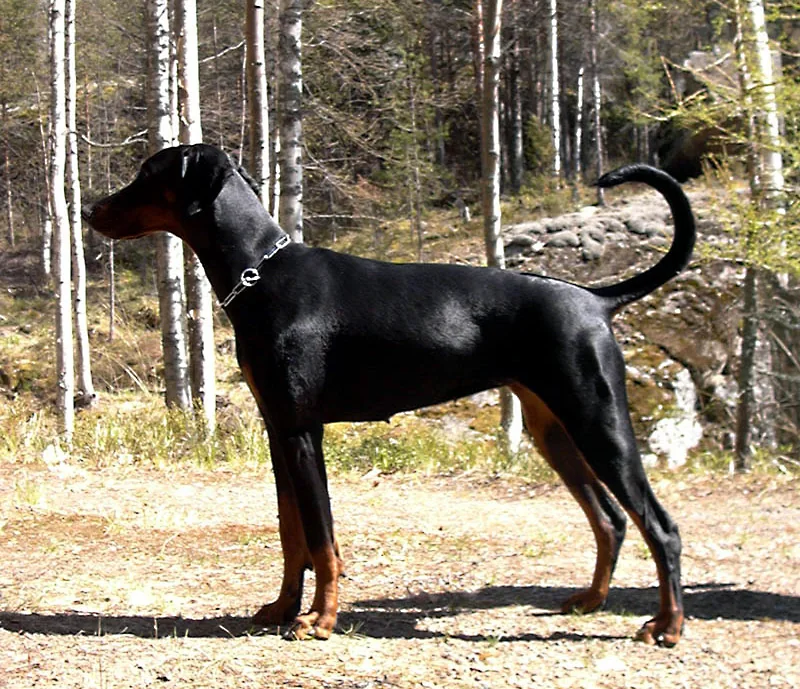
Dobermans are famous for personal protection because they tend to be athletic, vigilant and strongly oriented toward their people. Many want to be involved in everything the household does rather than living as an outdoor perimeter dog.
That closeness makes training especially important. A Doberman needs calm exposure to normal people and environments, impulse control and clear household rules.
Health selection matters. Prospective owners should ask responsible breeders about current breed-specific screening, especially cardiac health and other conditions recognized by the Doberman parent club.
Best for: owners who want an interactive, athletic guardian companion.
Think twice if: long daily absences or minimal training are expected.
3. Rottweiler — powerful confidence requires control
A well-bred Rottweiler can be steady, self-assured and deeply attached to family. Its physical strength changes the margin for error, however. Leash manners, handling, visitor routines and reliable basic cues are not optional.
Children and dogs should always be supervised together, especially with a large powerful breed. Even friendly play can knock a small child over.
Best for: structured homes comfortable handling a very strong dog.
Think twice if: the owner is physically unable to manage the dog or wants a dog that greets every stranger enthusiastically.
4. Boxer — alert guardian with a more social style
Boxers can offer a useful middle ground for families who want an alert, substantial dog without the same degree of aloof guardian temperament seen in some mastiff breeds. They are usually energetic, playful and people-oriented.
Adolescent Boxers can be exuberant. Training polite greetings, four paws on the floor and leash control matters as much as any "protection" trait.
Best for: active households that enjoy a playful dog.
Think twice if: the home wants a quiet, low-energy guardian.
5. Giant Schnauzer — serious working temperament
The Giant Schnauzer is not simply a bigger Miniature Schnauzer. It is a strong, energetic working breed that needs training, purposeful activity and substantial grooming.
Its intelligence can be an advantage for an experienced handler and a headache in an under-stimulating home.
Best for: experienced owners interested in training or dog sport.
Think twice if: the goal is an easygoing pet that happens to look imposing.
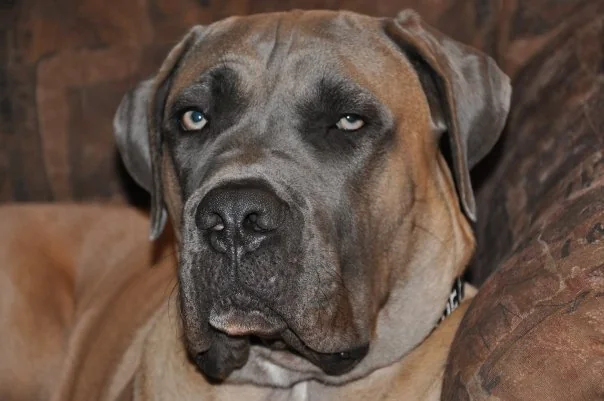
Cane Corsos were developed as substantial working guardians. Modern examples can be devoted household dogs, but their size, strength and natural watchfulness demand competent management.
Early socialization should teach neutrality and confidence, not indiscriminate friendliness and not suspicion of everything. A family Corso should be controllable around visitors and normal neighborhood life.
Best for: experienced large-dog owners with time for training.
Think twice if: this is the household's first serious guardian breed.
7. Bullmastiff — imposing without constant motion
Bullmastiffs can be calmer than many shepherd-style guardians once mature, but "calmer" does not mean effortless. They are extremely strong, can be stubborn and need good manners before adulthood.
Their body size also increases feeding, transport and veterinary costs.
Best for: homes wanting a substantial, less frenetic guardian type.
Think twice if: stairs, heat, transport or physical handling will be difficult.
8. Great Pyrenees — independent guardian, not obedience robot
Great Pyrenees were selected to make decisions while guarding livestock. That independence does not disappear in a pet home. They may bark extensively, patrol property and be less motivated by repetitive obedience than handler-focused working breeds.
Secure fencing is essential.
Best for: owners who understand livestock-guardian behavior and have suitable space.
Think twice if: close neighbors, off-leash reliability or silent evenings are priorities.
9. Anatolian Shepherd Dog — powerful territorial independence
Anatolian Shepherd Dogs are serious livestock guardians with independent decision-making. They can be devoted to their household, but they are not usually the easiest route to a predictable suburban protection companion.
This is a breed to choose because you understand and want livestock-guardian temperament—not because an intimidating silhouette looks reassuring.
Best for: experienced rural owners with a real reason for the breed's traits.
Think twice if: the dog will live in a busy high-traffic home with frequent unfamiliar visitors.
Family guardian vs personal protection dog
A stable family guardian may deter through presence, alert barking and natural watchfulness. A professionally trained protection dog is a different proposition involving specialized selection, training, control and liability.
Do not try to create aggression at home. Teaching a dog to mistrust people is not protection training.
What matters more than the ranking
Before choosing any guardian breed, evaluate:
- breeder temperament and health priorities;
- the parents' real-world stability;
- your experience with large/working dogs;
- daily training time;
- exercise needs;
- visitor frequency;
- children and other pets;
- fencing and local rules;
- insurance or housing restrictions;
- lifetime cost;
- access to a qualified trainer.
FAQ
What is the best guard dog for a family?
There is no universal winner. German Shepherds, Dobermans, Rottweilers and Boxers can suit different family homes, but the right answer depends on owner experience, activity level, handling ability and the individual dog's temperament.
Are guardian dogs safe with children?
Breed alone cannot answer that. Choose stable dogs, socialize carefully, train household manners and supervise children and dogs together.
Should a family protection dog be suspicious of strangers?
It should be able to distinguish normal life from genuinely unusual situations. Chronic fear, uncontrolled reactivity and indiscriminate aggression are liabilities, not desirable protection traits.
Is a bigger guardian automatically better?
No. Extra size increases deterrent presence but also increases handling difficulty, cost and consequences of mistakes.
Sources & further reading
- AKC Working Group
- AKC German Shepherd Dog
- AKC Doberman Pinscher
- AKC Rottweiler
- AKC Cane Corso
- Doberman Pinscher Club of America health information
- Cane Corso Association of America
A final trade-off record for 9 Family Guardian Dog Breeds: Protection, Temperament & Household Fit
Before deciding, give every remaining candidate one strongest advantage, one hardest daily requirement and one failure mode. For 9 Family Guardian Dog Breeds: Protection, Temperament & Household Fit, a failure mode might be escape, conflict with another animal, grooming that is repeatedly postponed, exercise needs that exceed the weekday schedule, or strength that one household member cannot manage. Write the prevention and backup for each one. If the backup depends on perfect weather, unlimited money or a single person never being unavailable, it is not robust enough.
Keep the record after placement. It becomes a practical reminder of why training, fencing, health screening or coat care mattered. The exercise also helps separate a passing preference from a durable match. 9 Family Guardian Dog Breeds: Protection, Temperament & Household Fit is useful when it makes the trade-offs clearer, not when it creates pressure to choose a winner.
Review point for 9 Family Guardian Dog Breeds: Protection, Temperament & Household Fit
Set a date to revisit the decision and name the observation that would bring the review forward. For 9 Family Guardian Dog Breeds: Protection, Temperament & Household Fit, a meaningful trigger might be discomfort, repeated equipment failure, a change in health or behavior, a household routine that no longer meets the dog's needs, or reliable new evidence. Record the current choice and its largest accepted limitation so the later review compares reality with the reason for choosing it.
A review is not an admission that the first decision failed. Dogs, products, services and households change. Keep what continues to work, replace assumptions with direct observation and involve a veterinarian or appropriately qualified professional when health, welfare or serious behavior is involved. 9 Family Guardian Dog Breeds: Protection, Temperament & Household Fit remains useful only while the plan is safe for the individual dog and sustainable for the people responsible for it.
Related reading
- 7 Best Guard Dog Breeds for Personal Protection and Security
- 7 Calm Guard Dog Breeds With a More Composed Style
- German Shepherd Dog: Temperament, Training, Exercise & Health
- Rottweiler: Temperament, Training, Exercise & Guardian-Dog Fit
- Doberman Pinscher: Temperament, Exercise, Training, Health & Owner Fit
- Cane Corso: Temperament, Training, Exercise, Health & Owner Fit