15 Black-and-White Dog Breeds — From Tiny Companions to Working Giants
Black-and-white coloring appears in dogs with completely different histories and personalities. A Boston Terrier and a Landseer-pattern Newfoundland may share a color palette, but almost nothing else about daily ownership.
If coat color drew you to this search, use it as the starting point—not the selection criterion. Energy level, adult size, grooming, training needs and health matter much more than markings.
Quick list
- Border Collie
- Boston Terrier
- Dalmatian
- Landseer-pattern Newfoundland
- Portuguese Water Dog
- English Springer Spaniel
- American Staffordshire Terrier
- Great Dane
- Papillon
- Japanese Chin
- Tibetan Terrier
- Shetland Sheepdog
- Miniature American Shepherd
- Smooth Fox Terrier
- French Bulldog
Not every individual in these breeds is black and white; many breed standards permit multiple colors.
1. Border Collie
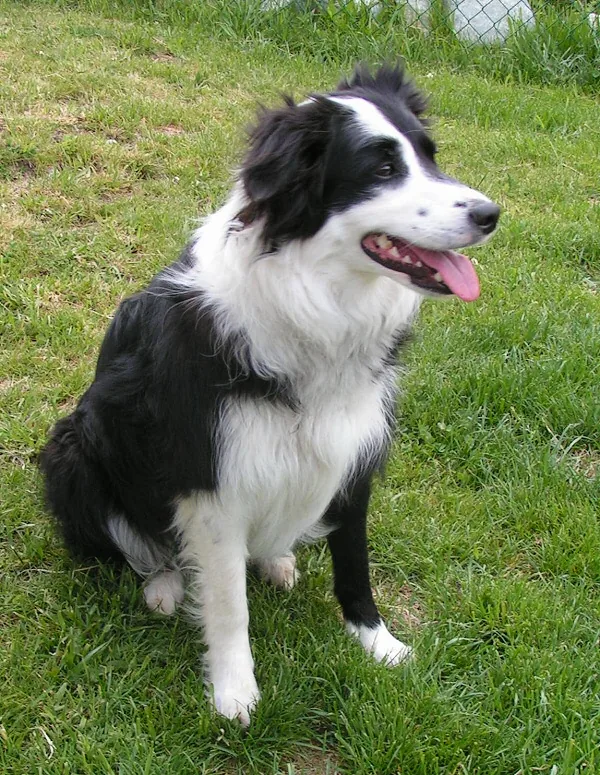
The classic black-and-white Border Collie is one of the most recognizable working-dog images in the world. Color is incidental to what actually defines the breed: intense herding ability, responsiveness and a need for mental engagement.
Best fit: owners who want training, sport or substantial daily activity.
Think twice if: you mainly want the “farm dog look” but not the workload.
2. Boston Terrier
Boston Terriers are compact companion dogs whose dark-and-white markings are often described as tuxedo-like. They are much easier to fit into a small home than a Border Collie, but brachycephalic anatomy means breathing and heat tolerance deserve attention.
Best fit: companion-focused households wanting a small, sociable dog.
Main consideration: heat, airway and eye health.
3. Dalmatian
Dalmatians are white dogs with distinctive spots that can be black or liver. Their history as carriage dogs reflects stamina and athleticism.
They are not decorative spotted couch dogs. Exercise and training matter, and responsible breeding includes attention to hearing because hereditary deafness is an important breed consideration.
4. Newfoundland — Landseer pattern
Newfoundlands can appear in a striking white-and-black Landseer pattern. They are enormous compared with most dogs on this list and were developed around water work.
Best fit: owners with space for a giant dog who accept heavy coat, drool and large-dog expense.
Main consideration: size changes everything from transport to veterinary costs.
5. Portuguese Water Dog
Portuguese Water Dogs can be black and white and have curly or wavy coats. They were developed as versatile working helpers around fishing communities.
Their coat is often attractive to people looking for lower shedding, but low shedding does not mean low grooming. Regular clipping and coat maintenance are part of ownership.
6. English Springer Spaniel
Black-and-white is one of the familiar Springer Spaniel color combinations. Springers are sporting dogs developed for active field work and usually need much more exercise than their soft expression suggests.
Best fit: active family or sporting home.
Main consideration: exercise plus ear/coat maintenance.
7. American Staffordshire Terrier
Black-and-white markings can occur in American Staffordshire Terriers. These are muscular, people-oriented terriers that require responsible socialization, training and awareness of local housing or legal restrictions.
Do not choose based on color alone; temperament and responsible sourcing are much more important.
8. Great Dane
Great Danes can appear in several patterns, including black-and-white harlequin or mantle combinations. The appeal is obvious, but giant size brings short-lifespan risk, feeding cost, orthopedic considerations and a need for excellent manners.
A giant dog that jumps, pulls or panics is much harder to manage than a small dog with the same behavior.
9. Papillon
Papillons are toy dogs known for large butterfly-like ears and a white coat with patches of color, including black. Despite the elegant appearance, they are bright, active little dogs that can enjoy substantial training.
Best fit: people who want a tiny dog that still likes learning and activity.
10. Japanese Chin
Japanese Chins commonly appear in black and white and were developed as companion dogs. They offer a very different energy profile from herding and sporting breeds on this list.
Flat facial structure means heat and respiratory health still deserve attention.
11. Tibetan Terrier
Tibetan Terriers can be black and white among many coat colors. Their long coat and traditional companion/watchdog role make them visually distinctive.
Main consideration: coat maintenance is substantial if kept long.
12. Shetland Sheepdog
Bi-black Shetland Sheepdogs show black and white without tan. Shelties are highly trainable herding dogs, usually far more mentally active than their small-to-medium size suggests.
They can also be vocal, something apartment dwellers should consider.
13. Miniature American Shepherd
Black-and-white markings occur in Miniature American Shepherds, often with or without tan points. They pack herding-dog energy and intelligence into a smaller body.
Smaller does not mean low-energy. They suit people who want an active training partner in a more compact package.
14. Smooth Fox Terrier
Smooth Fox Terriers often have a predominantly white coat with black or tan markings. Terriers can be lively, persistent and highly interested in movement and prey.
Best fit: owners who enjoy an energetic, characterful dog and can manage chase behavior.
15. French Bulldog
Some French Bulldogs are pied, producing black-and-white appearances. Their popularity and small size can make them seem easy, but brachycephalic health must be part of the decision.
Choose for health and functional structure rather than rare-color marketing.
Which black-and-white breed fits you?
For high activity and training: Border Collie, Miniature American Shepherd, English Springer Spaniel.
For a smaller companion: Boston Terrier, Papillon, Japanese Chin.
For water/working history: Portuguese Water Dog, Newfoundland.
For giant-dog enthusiasts: Great Dane or Newfoundland.
For people who want a terrier personality: Smooth Fox Terrier or AmStaff with appropriate experience.
A note about color-focused breeding
Do not pay a premium for a puppy solely because a seller labels the color “rare.” Responsible breeding prioritizes temperament, health, structure and breed-appropriate screening. Color is one visible trait among many.
Bottom line
Black and white can describe a coat, not a lifestyle. Narrow the list by adult size, energy, grooming, health and temperament before using appearance as the final preference.
Sources & further reading
Put 15 Black-and-White Dog Breeds — From Tiny Companions to Working Giants into a real scenario
Describe the ordinary setting before comparing choices: who is involved, how much time is available, what budget is sustainable and which failure would cause harm. For 15 Black-and-White Dog Breeds — From Tiny Companions to Working Giants, test the plan on a busy weekday and during an interruption such as illness, travel or bad weather. A recommendation that works only under ideal conditions is not durable.
Write the earliest sign that the plan is failing and the least disruptive adjustment. Add a backup person, place or tool where appropriate. This scenario turns 15 Black-and-White Dog Breeds — From Tiny Companions to Working Giants from a broad question into observable criteria and makes it easier to stop before inconvenience becomes a safety or welfare problem.
Evidence and assumptions in 15 Black-and-White Dog Breeds — From Tiny Companions to Working Giants
Separate direct facts from assumptions and preferences. In 15 Black-and-White Dog Breeds — From Tiny Companions to Working Giants, record which details come from primary records or current provider information, which vary by individual, and which are household choices. Dates matter for prices, services and rules; individual context matters for behavior and health. Avoid carrying a precise claim into the decision when its source, definition or current status is unclear.
State what new information would change the conclusion. That might be a veterinary examination, an adult measurement, a trial period, a current policy or a conversation with a qualified professional. A transparent uncertainty in 15 Black-and-White Dog Breeds — From Tiny Companions to Working Giants is more useful than an unsupported confident answer.
Failure modes to check in 15 Black-and-White Dog Breeds — From Tiny Companions to Working Giants
| Possible failure | Early signal | Response |
|---|---|---|
| the daily workload is underestimated | skipped sessions or rushed care | reduce complexity and arrange dependable help |
| cost becomes unsustainable | delayed maintenance or care | review the full recurring budget before committing |
| safety depends on one control | no backup when that control fails | add an independent barrier, person or process |
| individual needs differ from the general guide | repeated discomfort or poor recovery | reassess with direct observation and qualified advice |
Use this 15 Black-and-White Dog Breeds — From Tiny Companions to Working Giants table to compare consequences, not just likelihood. A rare but severe failure may deserve more preparation than a common inconvenience.
Related reading
- 14 Fastest Dog Breeds — and What Makes Them So Quick
- 15 Friendly Dog Breeds Known for Social Personalities
- 13 Dog Breeds That Can Be Good for First-Time Owners
- 9 Dog Breeds That Look Like Shih Tzu
Popular breed profiles