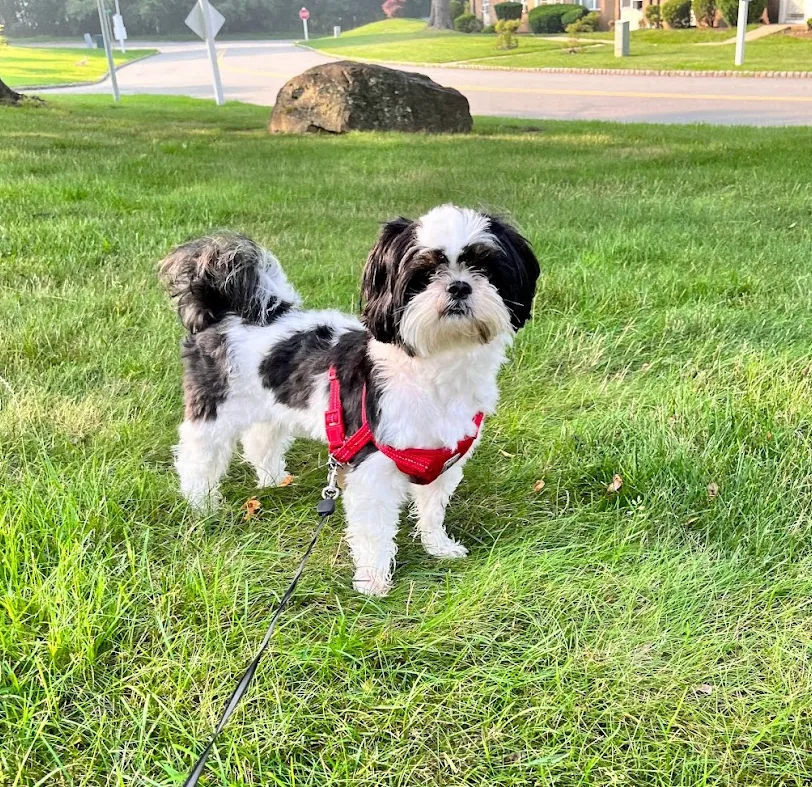
9 Dog Breeds That Look Like Shih Tzu
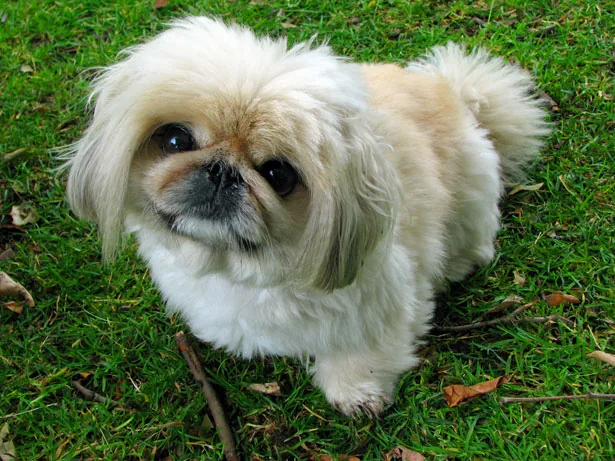
The Shih Tzu has a recognizable combination of a compact body, long coat, heavily furnished face and companion-dog temperament. Several other breeds can look similar at first glance, but their histories, activity levels, coat care and health needs can differ substantially.
Nine breeds to compare are the Lhasa Apso, Pekingese, Tibetan Spaniel, Havanese, Maltese, Lӧwchen, Japanese Chin, Bolognese and Coton de Tulear.
At a glance
| Breed | Why it resembles a Shih Tzu | Important difference |
|---|---|---|
| Lhasa Apso | Long Tibetan coat, similar size | More watchful/independent heritage |
| Pekingese | Long coat, short muzzle, companion history | Flatter face and different body proportions |
| Tibetan Spaniel | Tibetan companion origin and facial furnishings | Lighter coat, more spaniel-like outline |
| Havanese | Long flowing coat and companion size | Different coat texture and Cuban history |
| Maltese | Long silky coat, toy size | Usually pure white, more refined build |
| Lӧwchen | Long-coated small companion | More athletic outline; distinctive traditional trim |
| Japanese Chin | Toy companion, broad face and feathering | Silkier feathered coat and different head shape |
| Bolognese | Small, long-coated companion | White, fluffy/cottony presentation |
| Coton de Tulear | Small companion with profuse coat | Cotton-like coat and Madagascar history |
1. Lhasa Apso
The Lhasa Apso is probably the closest comparison. Both breeds trace important history to Tibet and both can carry long, dense coats with facial furnishings.
The Lhasa's traditional role included alerting inside Tibetan homes and monasteries, which contributes to a reputation for being more watchful and independent than the typically outgoing companion image of the Shih Tzu.
Choose a Lhasa if: you like a small long-coated dog with more watchdog character.
Choose a Shih Tzu if: you primarily want a companion-oriented toy breed.
2. Pekingese
Pekingese and Shih Tzu share imperial Chinese companion history, profuse coats and short muzzles. Pekingese tend to have a distinctly broad, low-slung outline and a more extreme facial structure.
Both require careful coat care, and both warrant attention to heat and airway health because of brachycephalic anatomy.
3. Tibetan Spaniel
Tibetan Spaniels are small dogs with an ancient Tibetan background. They usually have a shorter, less enveloping coat than a fully coated Shih Tzu, but facial expression, feathering and compact size can create a family resemblance.
They are often alert and enjoy elevated observation points—a reminder of their historical role around Tibetan monasteries.
4. Havanese
The Havanese has a soft, flowing coat and similar companion-dog scale. Its history, however, is Cuban rather than Asian.
Havanese can be lively, sociable and trainable. Coat maintenance remains substantial despite differences in texture.
5. Maltese
A fully coated Maltese can resemble a finer, all-white Shih Tzu at a quick glance. The Maltese is usually lighter in build and its classic coat is straight, silky and white.
Both require face and coat care, but they are distinct breeds with different proportions and histories.
6. Lӧwchen
The Lӧwchen is a rare small companion breed with a long coat. In full coat, the resemblance is more general; the traditional lion trim makes it immediately distinctive.
Lӧwchen tend to be lively and athletic for their size.
7. Japanese Chin
Japanese Chin share the small companion role, feathered coat and relatively broad facial appearance. Their coat tends to lie differently and the overall outline is lighter and more elegant.
Like other short-muzzled breeds, heat and airway considerations should be part of ownership planning.
8. Bolognese
The Bolognese is a small white companion breed from Italy. Its profuse coat can make it resemble a compact, fluffy Shih Tzu, although the head, texture and color are different.
It is closely associated with the Bichon family of companion dogs rather than Tibetan/Chinese lineages.
9. Coton de Tulear
The Coton de Tulear comes from Madagascar and is named for its cotton-like coat. Its small size, coat abundance and companion character make it attractive to people who like the Shih Tzu aesthetic but want a different breed type.
Shih Tzu vs Lhasa Apso: the common confusion
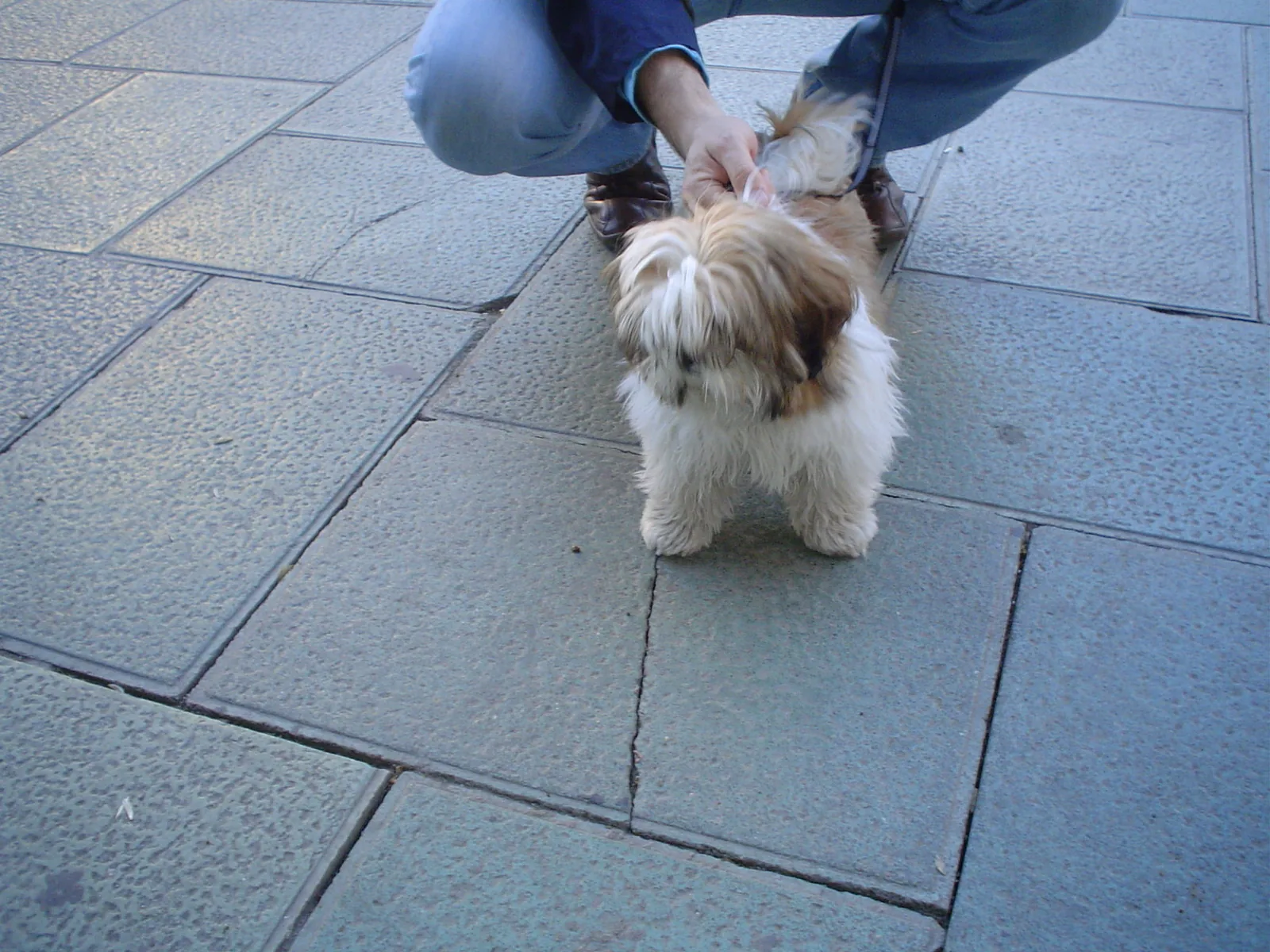
These two breeds are related historically but not interchangeable. The AKC's comparison of Lhasa Apso and Shih Tzu emphasizes differences in purpose, temperament and conformation despite their superficial similarity.
A practical shorthand:
- Shih Tzu: bred principally as a companion.
- Lhasa Apso: companion with a stronger historical indoor sentinel role.
Individual dogs can, of course, differ.
Grooming reality
Almost every breed in this article requires meaningful coat care. A long show-style coat can require:
- frequent brushing and combing;
- face cleaning;
- trimming around practical areas;
- professional grooming;
- careful detection of mats near ears, armpits and legs.
Keeping the coat shorter can reduce daily maintenance but does not eliminate grooming.
Health matters more than appearance
Do not choose solely because one dog resembles another. Short-muzzled breeds can have airway and heat-related concerns. Toy breeds may have dental, eye, patellar or other breed-specific risks. Research recommended health testing for the actual breed and breeder.
Bottom line
The Lhasa Apso and Pekingese are the most historically and visually obvious Shih Tzu comparisons. Havanese, Maltese and Coton de Tulear offer a similarly abundant coat in different breed families, while the Tibetan Spaniel provides a lighter-coated Tibetan alternative.
Choose by temperament, health and daily care requirements—not resemblance alone.
Sources & further reading
The first-month plan after choosing from 9 Dog Breeds That Look Like Shih Tzu
Keep the first weeks predictable. A dog selected through 9 Dog Breeds That Look Like Shih Tzu needs a quiet sleep area, a consistent toileting and feeding schedule, short reward-based lessons, controlled introductions and enough rest. Delay crowded outings and unrestricted greetings until you understand recovery, handling comfort and responses to the home. Management is not a substitute for training, but it prevents rehearsal of unsafe behavior while learning begins.
Record sleep, appetite, elimination, exercise, triggers and the time needed to settle. Share sudden changes with a veterinarian and emerging behavior risks with an appropriately qualified professional. Revisit the assumptions that led to the 9 Dog Breeds That Look Like Shih Tzu choice after two and four weeks. Adjust the plan to the individual in front of you rather than trying to make the dog match a breed summary.
A final trade-off record for 9 Dog Breeds That Look Like Shih Tzu
Before deciding, give every remaining candidate one strongest advantage, one hardest daily requirement and one failure mode. For 9 Dog Breeds That Look Like Shih Tzu, a failure mode might be escape, conflict with another animal, grooming that is repeatedly postponed, exercise needs that exceed the weekday schedule, or strength that one household member cannot manage. Write the prevention and backup for each one. If the backup depends on perfect weather, unlimited money or a single person never being unavailable, it is not robust enough.
Keep the record after placement. It becomes a practical reminder of why training, fencing, health screening or coat care mattered. The exercise also helps separate a passing preference from a durable match. 9 Dog Breeds That Look Like Shih Tzu is useful when it makes the trade-offs clearer, not when it creates pressure to choose a winner.
Review point for 9 Dog Breeds That Look Like Shih Tzu
Set a date to revisit the decision and name the observation that would bring the review forward. For 9 Dog Breeds That Look Like Shih Tzu, a meaningful trigger might be discomfort, repeated equipment failure, a change in health or behavior, a household routine that no longer meets the dog's needs, or reliable new evidence. Record the current choice and its largest accepted limitation so the later review compares reality with the reason for choosing it.
A review is not an admission that the first decision failed. Dogs, products, services and households change. Keep what continues to work, replace assumptions with direct observation and involve a veterinarian or appropriately qualified professional when health, welfare or serious behavior is involved. 9 Dog Breeds That Look Like Shih Tzu remains useful only while the plan is safe for the individual dog and sustainable for the people responsible for it.
Share the plan for 9 Dog Breeds That Look Like Shih Tzu
Make sure every person who handles the dog understands the same cues, fit checks, boundaries and stop rules. In 9 Dog Breeds That Look Like Shih Tzu, inconsistent handling can make an ordinary difficulty look unpredictable. Write a short handoff note covering the routine, the dog's known sensitivities, the backup equipment or contact, and the signs that mean the session should end. Test whether another adult can follow it without verbal explanation.
Include sitters, walkers and family members who may encounter the difficult scenario. Store emergency contacts and current care information where they can be found without unlocking this page. A shared plan reduces preventable mistakes and reveals when the proposed solution depends too heavily on one person's skill. That is a practical final check before relying on the recommendation in 9 Dog Breeds That Look Like Shih Tzu.
Keep the conclusion proportionate in 9 Dog Breeds That Look Like Shih Tzu
Use the evidence to narrow choices, not to promise an outcome. For 9 Dog Breeds That Look Like Shih Tzu, breed tendencies, measurements, population ranges and product features all have limits; the individual dog and current conditions remain decisive. Prefer a conclusion that names who may benefit, who should avoid the option and what must be verified next. That structure is more honest than a universal winner.
If two choices remain close, favor the one with the safer failure mode and the simpler routine. Delay the decision when essential records, measurements or professional guidance are missing. The goal of 9 Dog Breeds That Look Like Shih Tzu is a choice that can be explained, monitored and changed responsibly—not confidence for its own sake.
Related reading
- 13 Chinese Dog Breeds: Origins, Temperament and What They're Like to Own
- 15 Dog Breeds With Pointy Ears
- 13 Dog Breeds That Can Be Good for First-Time Owners
- 7 Quiet Small Dog Breeds for Calmer Homes