7 Large Dog Breeds That Can Suit First-Time Owners — With Realistic Caveats
A large dog can absolutely be a first dog. The better question is whether the individual breed's energy, trainability, strength, coat care and temperament match a beginner's time and skills.
Large dogs magnify practical mistakes. Pulling on leash is harder to ignore. Counter-surfing reaches more counters. Transport costs more. Medication and food often cost more. An adolescent dog that jumps on guests can be physically overwhelming.
The breeds below can work for first-time owners who are willing to train, but none is "easy" simply because it is friendly.
Quick comparison
| Breed | Typical appeal | Beginner challenge | Exercise | Grooming |
|---|---|---|---|---|
| Labrador Retriever | social, trainable | adolescent energy | high | low-moderate |
| Golden Retriever | biddable, social | coat + energy | high | moderate-high |
| Standard Poodle | intelligent, athletic | grooming | high | high |
| Greyhound | often calm indoors | prey drive | moderate | low |
| Newfoundland | gentle giant reputation | size, drool, heat | moderate | high |
| Bernese Mountain Dog | affectionate, steady | coat, health, size | moderate | high |
| Great Dane | often companion-oriented | giant size/cost | moderate | low |
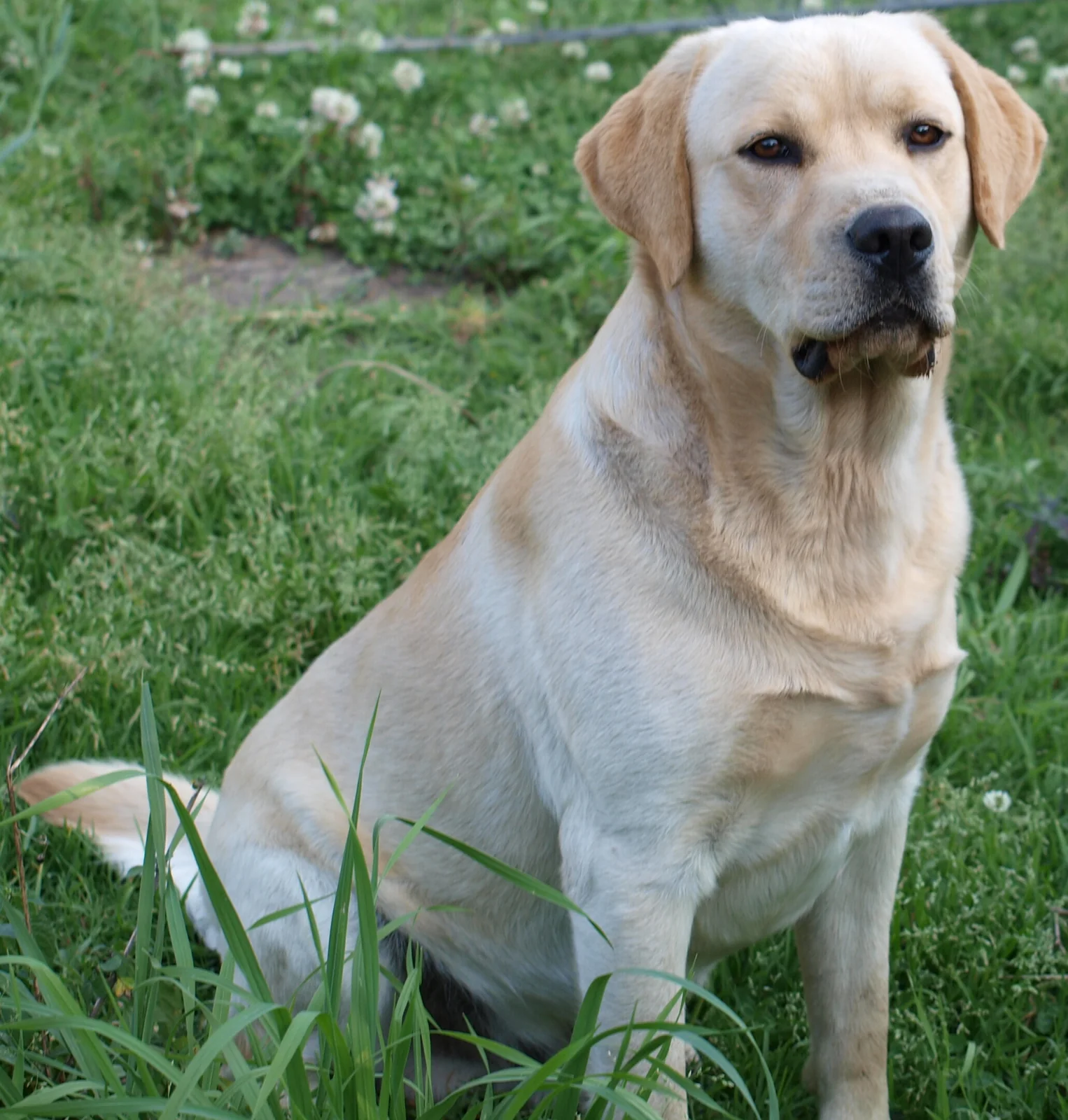
1. Labrador Retriever
Labradors are popular first-dog recommendations because many are food-motivated, social and responsive to training. But young Labs are not couch potatoes. They can be powerful, mouthy, excitable and enthusiastic for several years.
A beginner who teaches leash skills, settling, recall and polite greetings from the start can have an excellent partner.
Best for: active households that want training and outdoor activity.
Main beginner trap: assuming "friendly" means automatically well-behaved.
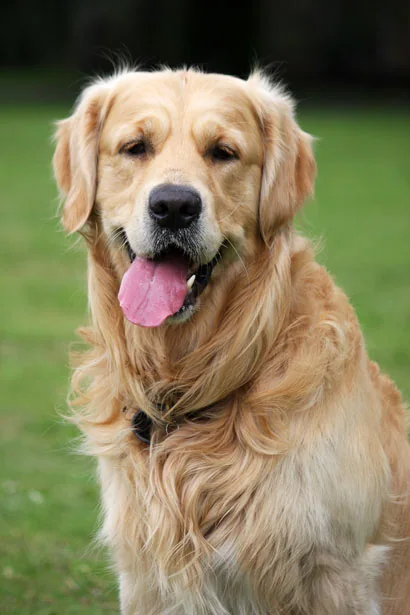
Goldens often combine social temperament with strong trainability. They are still sporting dogs and generally need regular exercise, training and engagement.
Coat maintenance, shedding and responsible health selection deserve attention.
Best for: people who want an interactive family companion and accept coat care.
Main beginner trap: underestimating adolescent energy and grooming.
3. Standard Poodle
Standard Poodles are athletic, highly trainable and versatile. They can be excellent for a beginner who enjoys teaching a dog.
The major trade-off is coat care. A low-shedding coat is not a maintenance-free coat; professional grooming or skilled home grooming becomes a recurring responsibility.
Best for: engaged owners who value training and can budget for grooming.
Main beginner trap: choosing solely for low shedding.
4. Greyhound
Many adult Greyhounds are surprisingly quiet in the house and have simple coats. That can make them manageable for a thoughtful beginner.
Prey drive, secure walking and safe off-leash management are important. A Greyhound's speed means a mistake around an unsecured area can become serious quickly.
Best for: quieter homes wanting a larger dog without all-day intensity.
Main beginner trap: confusing calm indoor behavior with reliable off-leash behavior.
5. Newfoundland
Newfoundlands have a reputation for steady, people-friendly temperament, but their giant size changes daily life. Expect drool, coat care, wet-dog logistics, more expensive feeding and medication, and a need for excellent leash manners.
Best for: homes with space, climate awareness and a realistic giant-breed budget.
Main beginner trap: falling for gentle temperament without planning for giant-dog logistics.
6. Bernese Mountain Dog
Bernese Mountain Dogs can be affectionate and cooperative. They generally fit best with owners who enjoy moderate activity and close companionship.
The dense coat and important breed-health considerations mean selection and veterinary planning matter.
Best for: cooler climates and owners comfortable with shedding and grooming.
Main beginner trap: choosing by appearance without researching health and heat tolerance.
7. Great Dane
Great Danes are enormous, but many are household-oriented companions rather than nonstop athletes. A calm adult can feel easier indoors than some smaller high-drive breeds.
Size is the defining issue. Food, beds, crates, vehicles, medications and emergency handling all become bigger.
Best for: owners who specifically want giant-dog life and can afford it.
Main beginner trap: treating giant size as only a visual feature.
Large breeds a beginner should research especially carefully
This guide does not say a novice can never own a German Shepherd, Rottweiler, Cane Corso, Belgian Malinois or livestock guardian. It says those breeds usually impose a steeper learning curve because working drive, guarding instinct, independence or physical power makes management more consequential.
A highly committed beginner with excellent mentoring may succeed. A casual beginner looking for a forgiving first dog has easier options.
Beginner checklist before choosing a large dog
Ask yourself:
- Can I physically control 30–60+ kg of dog?
- Can I train several short sessions every day?
- Can I afford food, preventives and veterinary care at large-dog doses?
- Can my vehicle transport the dog safely?
- Are stairs or lifting likely to become a problem?
- Does my housing allow the breed and size?
- Can I manage adolescence, not just the puppy stage?
- Do I have access to reward-based training help?
FAQ
Is a Labrador a good first large dog?
Often, yes, for active owners who are ready for a strong and energetic adolescent.
Are giant breeds easier because they are calmer?
Not necessarily. Lower activity can be offset by enormous handling, cost and health-management demands.
What large dog is easiest to groom?
Short-coated breeds such as Greyhounds and Great Danes have relatively simple coats, though nails, ears, teeth and general care still matter.
Should a first-time owner avoid all guard breeds?
No absolute rule fits everyone, but serious guardian and high-drive working breeds give beginners less margin for error.
Sources & further reading
- AKC breed directory
- AKC Labrador Retriever
- AKC Golden Retriever
- AKC Poodle
- AKC Greyhound
- AKC Newfoundland
- AKC Bernese Mountain Dog
- AKC Great Dane
Share the plan for 7 Large Dog Breeds That Can Suit First-Time Owners — With Realistic Caveats
Make sure every person who handles the dog understands the same cues, fit checks, boundaries and stop rules. In 7 Large Dog Breeds That Can Suit First-Time Owners — With Realistic Caveats, inconsistent handling can make an ordinary difficulty look unpredictable. Write a short handoff note covering the routine, the dog's known sensitivities, the backup equipment or contact, and the signs that mean the session should end. Test whether another adult can follow it without verbal explanation.
Include sitters, walkers and family members who may encounter the difficult scenario. Store emergency contacts and current care information where they can be found without unlocking this page. A shared plan reduces preventable mistakes and reveals when the proposed solution depends too heavily on one person's skill. That is a practical final check before relying on the recommendation in 7 Large Dog Breeds That Can Suit First-Time Owners — With Realistic Caveats.
Keep the conclusion proportionate in 7 Large Dog Breeds That Can Suit First-Time Owners — With Realistic Caveats
Use the evidence to narrow choices, not to promise an outcome. For 7 Large Dog Breeds That Can Suit First-Time Owners — With Realistic Caveats, breed tendencies, measurements, population ranges and product features all have limits; the individual dog and current conditions remain decisive. Prefer a conclusion that names who may benefit, who should avoid the option and what must be verified next. That structure is more honest than a universal winner.
If two choices remain close, favor the one with the safer failure mode and the simpler routine. Delay the decision when essential records, measurements or professional guidance are missing. The goal of 7 Large Dog Breeds That Can Suit First-Time Owners — With Realistic Caveats is a choice that can be explained, monitored and changed responsibly—not confidence for its own sake.
A weekday test for 7 Large Dog Breeds That Can Suit First-Time Owners — With Realistic Caveats
Build the decision around an ordinary Tuesday, not the most active weekend of the year. For 7 Large Dog Breeds That Can Suit First-Time Owners — With Realistic Caveats, write down who handles the morning outing, how long the dog may be alone, where decompression happens after visitors arrive, and what exercise is still realistic in poor weather. Add the time required for coat care, training and transport. If a candidate needs more physical control or supervision than one adult can provide, treat that as a mismatch rather than a challenge to solve after adoption.
Run the same test for a difficult week. Illness, work deadlines and winter weather do not remove a dog's needs. A workable plan for 7 Large Dog Breeds That Can Suit First-Time Owners — With Realistic Caveats includes a backup walker or sitter, safe separation from children and other animals, and a quiet place where the dog can settle. The strongest candidate is not the one with the most dramatic strengths; it is the one whose demanding days remain manageable.
Questions for a breeder or rescue about 7 Large Dog Breeds That Can Suit First-Time Owners — With Realistic Caveats
Ask for examples rather than labels. In a 7 Large Dog Breeds That Can Suit First-Time Owners — With Realistic Caveats conversation, “friendly,” “protective” and “high energy” are too broad unless the person describes behavior around unfamiliar adults, children, dogs, handling, food, barriers and recovery after surprise. Ask how mature relatives behave, which health screening was completed, what the dog does after exercise, and what has been hardest in previous placements.
For an adult dog, request the foster or previous-home routine and ask what changes across environments. For a puppy, remember that adult size, social maturity and inherited work style have not appeared yet. Reputable placements welcome questions, discuss weaknesses without defensiveness and remain available after the dog goes home. Pressure, guarantees and refusal to share records are reasons to leave the 7 Large Dog Breeds That Can Suit First-Time Owners — With Realistic Caveats shortlist open.