15 Dog Breeds With Pointy Ears
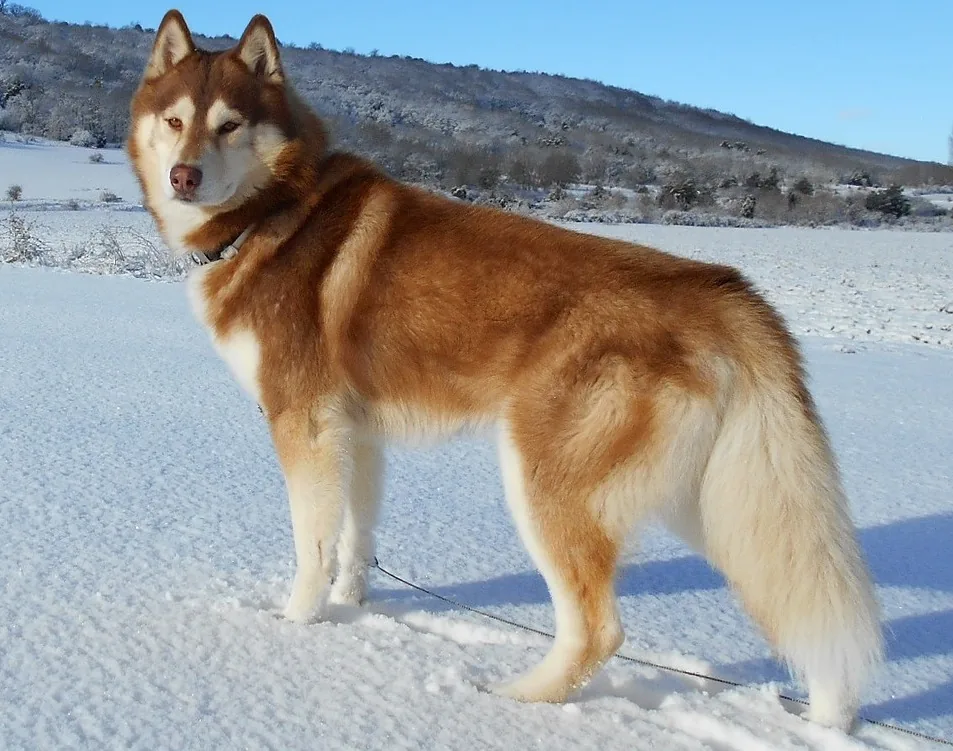
Pointed ears occur across dog breeds that otherwise have very little in common. Many spitz breeds have upright ears along with dense double coats and curled tails, while terriers, herders and toy breeds can have erect ears for completely different historical reasons.
If pointed ears are the look you love, use this list to find breeds worth researching—then make the decision based on temperament, exercise, grooming and health.
1. Siberian Husky
Huskies combine triangular upright ears with a thick double coat and strong endurance. They are social, athletic dogs developed for sled work, not low-maintenance backyard guardians.
2. Alaskan Malamute
Malamutes are larger and heavier than Huskies. Their pointed ears are part of the classic northern-spitz outline. Strength, shedding and exercise needs make them a serious ownership commitment.
3. German Shepherd Dog
Adult German Shepherds are recognized by large upright ears and an athletic working build. The breed needs training and mental work far more than it needs an owner attracted to the “police dog” appearance.
4. Belgian Malinois
Malinois have erect triangular ears and a leaner working-dog outline. They are among the most demanding breeds on this list because high drive and trainability need productive daily outlets.
5. Pembroke Welsh Corgi
Corgis combine big upright ears with short legs and a herding background. They may be compact, but many remain active, vocal and highly engaged with household activity.
6. Cardigan Welsh Corgi
Cardigans also have prominent upright ears, a long body and herding history. They retain a tail, unlike the commonly docked or naturally short-tailed appearance associated with many Pembrokes.
7. French Bulldog
The French Bulldog's “bat ears” are one of its defining features. The breed is compact and popular in cities, but brachycephalic health and heat tolerance should matter more than ear shape.
8. Chihuahua
Large erect ears emphasize the Chihuahua's tiny head and alert expression. Chihuahuas can live long lives but still require dental, cardiac and patellar health awareness.
9. Papillon
The erect-eared Papillon has dramatic fringed ears that inspired the breed's butterfly name. Some dogs in the breed have dropped ears and are known as the Phalène variety.
10. Norwich Terrier
Norwich Terriers have small pointed ears. Their close relative, the Norfolk Terrier, is distinguished partly by folded ears—a useful example of ear carriage separating two otherwise similar-looking breeds.
11. Bull Terrier
Bull Terriers have small erect ears above the breed's distinctive egg-shaped head. They are muscular terriers with playful but strong personalities.
12. Shiba Inu
Shibas have the classic compact spitz appearance: pointed ears, dense double coat and curled tail. Their independence can challenge owners expecting retriever-like obedience.
13. Akita
Akitas are large Japanese spitz-type dogs with erect ears and a powerful body. They are serious, often reserved dogs and not a casual choice for multi-dog or inexperienced homes.
14. Norwegian Elkhound
Norwegian Elkhounds combine upright ears with a dense gray coat and curled tail. They were developed as durable hunting dogs in northern conditions and need exercise plus coat management.
15. Finnish Spitz
The Finnish Spitz has pointed ears, a fox-like outline and a strong tradition as a vocal hunting dog. Owners attracted to the appearance should know that barking is deeply connected to the breed's working style.
Why do some breeds have upright ears?
Ear shape is influenced by genetics and selective breeding. In many spitz and working breeds, erect ears are part of a broader ancestral type rather than an independently selected cosmetic feature.
Do not manipulate a puppy's ears through unverified supplements or unsafe taping methods without qualified veterinary/breed guidance. Ear carriage can change naturally during development and differs by breed.
Bottom line
For a small pointy-eared companion, look at the Chihuahua or Papillon. For herding-dog intelligence, consider the Corgis or German Shepherd. For northern-spitz looks, Huskies, Malamutes, Shibas and Akitas offer very different sizes and temperaments. Choose the daily ownership package—not the ears.
Sources & further reading
Keep the conclusion proportionate in 15 Dog Breeds With Pointy Ears
Use the evidence to narrow choices, not to promise an outcome. For 15 Dog Breeds With Pointy Ears, breed tendencies, measurements, population ranges and product features all have limits; the individual dog and current conditions remain decisive. Prefer a conclusion that names who may benefit, who should avoid the option and what must be verified next. That structure is more honest than a universal winner.
If two choices remain close, favor the one with the safer failure mode and the simpler routine. Delay the decision when essential records, measurements or professional guidance are missing. The goal of 15 Dog Breeds With Pointy Ears is a choice that can be explained, monitored and changed responsibly—not confidence for its own sake.
A weekday test for 15 Dog Breeds With Pointy Ears
Build the decision around an ordinary Tuesday, not the most active weekend of the year. For 15 Dog Breeds With Pointy Ears, write down who handles the morning outing, how long the dog may be alone, where decompression happens after visitors arrive, and what exercise is still realistic in poor weather. Add the time required for coat care, training and transport. If a candidate needs more physical control or supervision than one adult can provide, treat that as a mismatch rather than a challenge to solve after adoption.
Run the same test for a difficult week. Illness, work deadlines and winter weather do not remove a dog's needs. A workable plan for 15 Dog Breeds With Pointy Ears includes a backup walker or sitter, safe separation from children and other animals, and a quiet place where the dog can settle. The strongest candidate is not the one with the most dramatic strengths; it is the one whose demanding days remain manageable.
Questions for a breeder or rescue about 15 Dog Breeds With Pointy Ears
Ask for examples rather than labels. In a 15 Dog Breeds With Pointy Ears conversation, “friendly,” “protective” and “high energy” are too broad unless the person describes behavior around unfamiliar adults, children, dogs, handling, food, barriers and recovery after surprise. Ask how mature relatives behave, which health screening was completed, what the dog does after exercise, and what has been hardest in previous placements.
For an adult dog, request the foster or previous-home routine and ask what changes across environments. For a puppy, remember that adult size, social maturity and inherited work style have not appeared yet. Reputable placements welcome questions, discuss weaknesses without defensiveness and remain available after the dog goes home. Pressure, guarantees and refusal to share records are reasons to leave the 15 Dog Breeds With Pointy Ears shortlist open.
Household scenarios to compare for 15 Dog Breeds With Pointy Ears
| Scenario | What to observe | Why it changes the match |
|---|---|---|
| Visitors at the door | arousal, recovery and response to the handler | alert behavior can become difficult without a practiced routine |
| A rainy low-activity day | ability to settle after indoor enrichment | physical exercise cannot be the only route to calm |
| Passing dogs on leash | distance needed and ability to disengage | adult strength magnifies ordinary training gaps |
| Children or older adults | movement sensitivity and physical leverage | supervision must be realistic, not assumed |
| Grooming or veterinary handling | comfort with touch and restraint | routine care can become a recurring safety problem |
Use the 15 Dog Breeds With Pointy Ears scenarios to identify the skill the household would need to teach, the management equipment required, and the consequence if either fails. One poor fit in a high-consequence scenario can outweigh several appealing traits.
Cost and care planning for 15 Dog Breeds With Pointy Ears
Purchase price or adoption fee is only the entry cost. A 15 Dog Breeds With Pointy Ears budget should include food at adult size, preventive veterinary care, insurance or an emergency reserve, training, secure containment, grooming tools or professional appointments, boarding, travel equipment and replacement of damaged items. Large and giant dogs can make medication, crates and transport materially more expensive, while long or specialized coats can shift cost into regular labor.
Ask what happens if the dog develops a chronic condition or needs behavior support. The honest answer may change the shortlist. Do not choose a candidate because routine expenses barely fit today; 15 Dog Breeds With Pointy Ears should still work when veterinary, housing or care costs rise. A sustainable plan protects the dog from later rehoming and gives the household room to seek help early.
The first-month plan after choosing from 15 Dog Breeds With Pointy Ears
Keep the first weeks predictable. A dog selected through 15 Dog Breeds With Pointy Ears needs a quiet sleep area, a consistent toileting and feeding schedule, short reward-based lessons, controlled introductions and enough rest. Delay crowded outings and unrestricted greetings until you understand recovery, handling comfort and responses to the home. Management is not a substitute for training, but it prevents rehearsal of unsafe behavior while learning begins.
Record sleep, appetite, elimination, exercise, triggers and the time needed to settle. Share sudden changes with a veterinarian and emerging behavior risks with an appropriately qualified professional. Revisit the assumptions that led to the 15 Dog Breeds With Pointy Ears choice after two and four weeks. Adjust the plan to the individual in front of you rather than trying to make the dog match a breed summary.
A final trade-off record for 15 Dog Breeds With Pointy Ears
Before deciding, give every remaining candidate one strongest advantage, one hardest daily requirement and one failure mode. For 15 Dog Breeds With Pointy Ears, a failure mode might be escape, conflict with another animal, grooming that is repeatedly postponed, exercise needs that exceed the weekday schedule, or strength that one household member cannot manage. Write the prevention and backup for each one. If the backup depends on perfect weather, unlimited money or a single person never being unavailable, it is not robust enough.
Keep the record after placement. It becomes a practical reminder of why training, fencing, health screening or coat care mattered. The exercise also helps separate a passing preference from a durable match. 15 Dog Breeds With Pointy Ears is useful when it makes the trade-offs clearer, not when it creates pressure to choose a winner.
Review point for 15 Dog Breeds With Pointy Ears
Set a date to revisit the decision and name the observation that would bring the review forward. For 15 Dog Breeds With Pointy Ears, a meaningful trigger might be discomfort, repeated equipment failure, a change in health or behavior, a household routine that no longer meets the dog's needs, or reliable new evidence. Record the current choice and its largest accepted limitation so the later review compares reality with the reason for choosing it.
A review is not an admission that the first decision failed. Dogs, products, services and households change. Keep what continues to work, replace assumptions with direct observation and involve a veterinarian or appropriately qualified professional when health, welfare or serious behavior is involved. 15 Dog Breeds With Pointy Ears remains useful only while the plan is safe for the individual dog and sustainable for the people responsible for it.
Share the plan for 15 Dog Breeds With Pointy Ears
Make sure every person who handles the dog understands the same cues, fit checks, boundaries and stop rules. In 15 Dog Breeds With Pointy Ears, inconsistent handling can make an ordinary difficulty look unpredictable. Write a short handoff note covering the routine, the dog's known sensitivities, the backup equipment or contact, and the signs that mean the session should end. Test whether another adult can follow it without verbal explanation.
Include sitters, walkers and family members who may encounter the difficult scenario. Store emergency contacts and current care information where they can be found without unlocking this page. A shared plan reduces preventable mistakes and reveals when the proposed solution depends too heavily on one person's skill. That is a practical final check before relying on the recommendation in 15 Dog Breeds With Pointy Ears.
Related reading
- 13 Chinese Dog Breeds: Origins, Temperament and What They're Like to Own
- 7 Quiet Small Dog Breeds for Calmer Homes
- 13 Dog Breeds That Can Be Good for First-Time Owners
- 7 Best Guard Dog Breeds for Personal Protection and Security