Rottweiler vs Cane Corso: Which Guardian Breed Fits You Better?
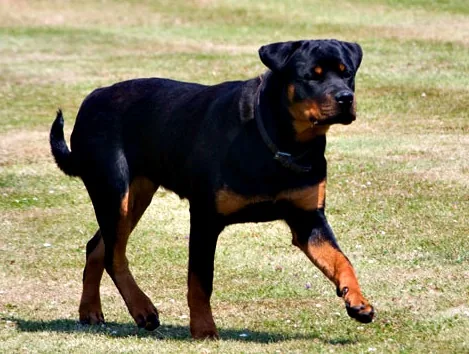
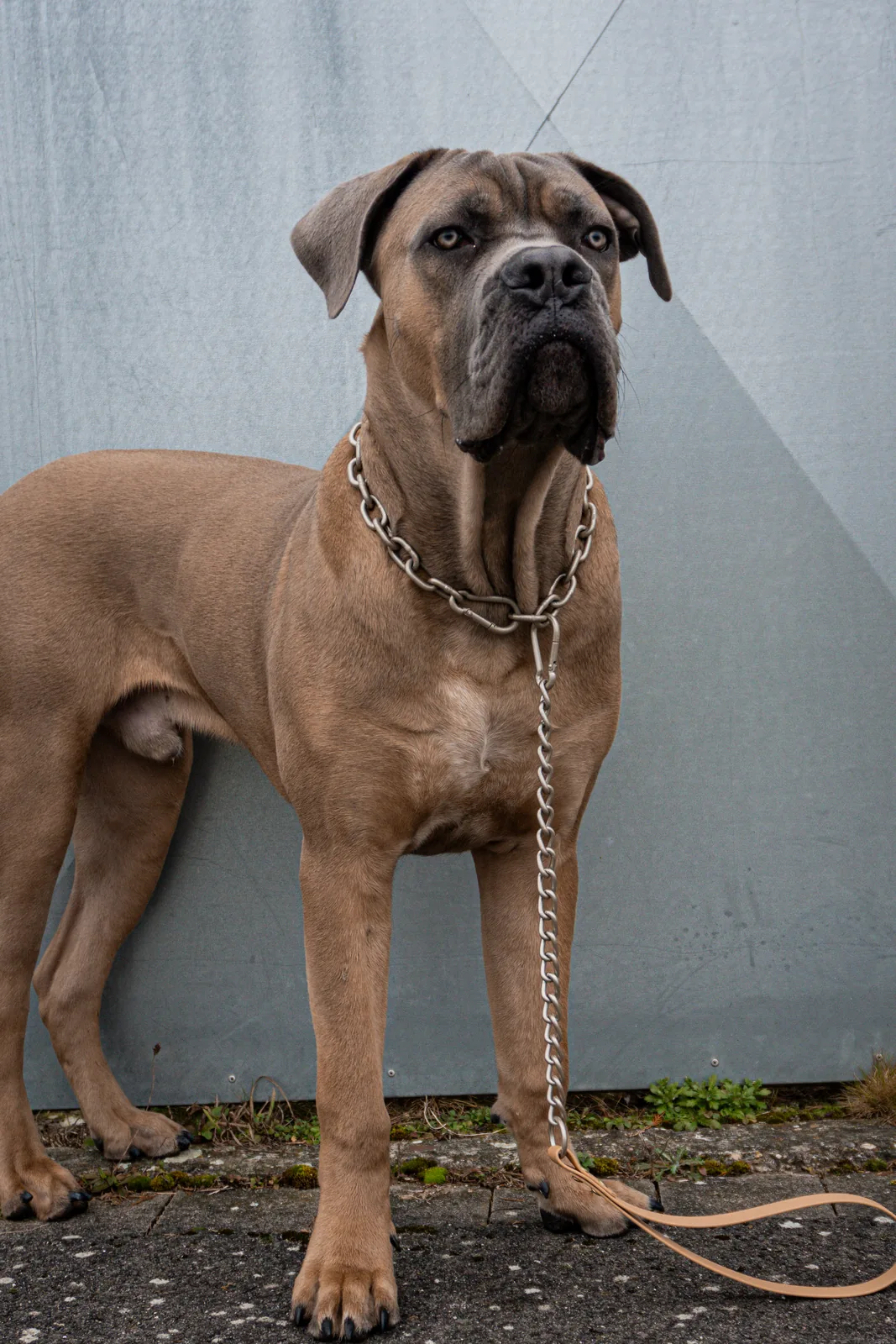
Rottweilers and Cane Corsos are powerful working breeds with natural guarding instincts, substantial physical strength and a reputation that attracts people looking for home protection. Those same qualities make both poor choices for an owner who wants an impressive dog without investing heavily in training and management.
A Rottweiler often suits an owner who wants a substantial, trainable working companion with a long-established modern breed community and a somewhat more familiar family-dog role. A Cane Corso often appeals to experienced guardian-breed owners who are comfortable with a more overtly mastiff-like, territorial and physically imposing dog.
Neither is automatically “better.” The safer question is which temperament and management burden fits your household.
Quick comparison
| Trait | Rottweiler | Cane Corso |
|---|---|---|
| Build | Compact, heavy, powerful | Large, athletic mastiff type |
| Energy | Moderate–high | Moderate–high |
| Trainability | High | High, but can be assertive |
| Natural guarding | High | High |
| Stranger reserve | Often aloof | Often strongly watchful/reserved |
| Grooming | Simple short coat | Simple short coat |
| Beginner suitability | Low | Low |
| Best fit | Structured experienced household | Experienced guardian-breed household |
Temperament
Well-bred Rottweilers are often confident, observant and affectionate within their family. The breed was historically used as a drover and working dog, so physical power and cooperative work both matter.
The Cane Corso is an Italian mastiff-type guardian with a history tied to property, farm and family protection. A stable Corso should not be indiscriminately hostile, but many are naturally serious about their territory and people.
With either breed, unstable fearfulness is not a desirable form of “protectiveness.” Nervous dogs with great physical strength can be difficult and dangerous to manage.
Training
Both breeds require early foundations in:
- loose-leash walking;
- recall;
- place/settle behavior;
- impulse control;
- cooperative veterinary handling;
- calm visitor routines;
- neutral behavior around ordinary public activity.
Rottweilers often enjoy structured training and can be versatile in obedience and working activities. Cane Corsos can also learn quickly, but an owner must be comfortable setting consistent rules for a large independent-minded guardian.
Neither breed benefits from harsh attempts to “show dominance.” Clear reinforcement, consistency, prevention and skilled handling are more useful than conflict.
Exercise
These are not couch ornaments, but neither needs endless repetitive sprinting.
Appropriate activity can include brisk walking, hiking, obedience, scent work and controlled strength/conditioning once mature. Growing giant/large dogs should not be pushed into excessive repetitive impact work.
The goal is a fit dog with a brain that has something constructive to do.
Family life
Both breeds can bond closely with a household. Their size changes the risk equation around small children, visitors and other pets.
Supervision matters because:
- a playful adult can knock down a child;
- guarding behavior can be triggered by noisy play;
- visitors may not read canine body language correctly;
- adolescence can bring increased confidence and territorial behavior.
Do not buy either breed solely as a “family protector.” Choose first for stable temperament and suitability as a household dog.
Other dogs and cats
Individual variation is large. Early exposure helps but does not guarantee adult compatibility.
If multi-pet living is important, tell the breeder or rescue exactly what animals are already in the home. Controlled introductions and long-term management may still be necessary.
Guarding ability
Both breeds can act as strong visual deterrents and can be naturally watchful. That is different from trained personal protection.
A useful household guardian must remain controllable. A dog that cannot safely accept invited guests, veterinary care or routine neighborhood activity is not a security upgrade.
Grooming
Both have relatively easy short coats. Routine brushing, nails, ears and dental care still matter.
Neither has the high grooming burden of a long-coated guardian breed.
Health and breeder selection
For both breeds, ask for documented health testing that follows current parent-club/registry recommendations. Large powerful dogs also benefit from breeders who select for functional movement, moderate structure and stable temperament rather than exaggerated size.
Avoid sellers whose main marketing points are:
- “XXL”;
- oversized heads;
- extreme weight;
- rare colors;
- aggression;
- “no one will come near your house.”
Those are not substitutes for health and temperament.
Which is better for a first-time owner?
Generally, neither.
A highly committed first-time owner with excellent professional support may succeed with an unusually suitable individual, but there are many easier breeds for learning dog ownership.
Which is better for guarding?
Both can be natural guardians. The better choice is the dog whose temperament is stable, whose owner can control it and whose needs fit the home.
For formal protection work, consult qualified professionals before choosing a dog at all.
Bottom line
Choose the Rottweiler if you prefer a powerful working breed that often combines guarding with a more familiar obedience/companion role. Consider the Cane Corso if you already understand serious guardian breeds and want a mastiff-type dog with strong territorial presence. In both cases, breeder quality and owner skill matter more than internet claims about which dog is “tougher.”
Sources & further reading
Related reading
- 7 Best Guard Dog Breeds for Personal Protection and Security
- 7 Calm Guard Dog Breeds With a More Composed Style
- German Shepherd vs Rottweiler: Which Fits Your Life Better?
- Doberman vs Rottweiler: Which Guardian Breed Is Right for You?
- German Shepherd vs Cane Corso: Training, Guarding & Family Fit